Best Drum Machines for Beatmakers: Hardware That Hits
From the Roland TR-8S to the Elektron Digitakt, these are the best drum machines for beatmakers who want hands-on control over their grooves.
Music Gear Specialist Review Desk
Gear Research & Analysis
ℹ️ Affiliate Disclosure: Music Gear Specialist earns from qualifying purchases through Amazon and other partner links. This doesn't affect our recommendations—we only suggest gear we'd use ourselves.
Software drum plugins have gotten absurdly good. Superior Drummer 3, XLN Audio XO, and Native Instruments Battery can produce sounds indistinguishable from a $3,000 hardware unit. So why are beatmakers in 2026 still buying dedicated drum machines?
Because creativity is not just about the sounds. It is about the workflow. There is a reason producers who can afford any plugin on the planet still choose to stand in front of a box with 16 rubber pads and a row of knobs. The physical act of tapping out a rhythm, cranking a filter in real time, and chaining patterns by hand produces musical ideas that never emerge from staring at a screen and clicking a mouse.
If you make beats in any genre, from lo-fi hip-hop to techno to trap to experimental noise, having a dedicated drum machine in your setup changes how you think about rhythm. Here are the best options for beatmakers in 2026.
What to Look for in a Drum Machine
Before you drop $500-$1,500 on a box, understand the features that actually matter for beatmaking:
Sound Engine (Analog vs. Digital vs. Samples): Analog machines generate sounds through electrical circuits, giving you that fat, warm thump that sits heavy in a mix. Digital machines use synthesis or samples, offering far more variety and programmability. Most modern machines combine both approaches.
Sequencer Depth: A basic 16-step sequencer lets you program one bar at a time. More advanced sequencers offer conditional triggers (a note plays only every fourth loop), probability locks (a hi-hat has a 50% chance of firing), and parameter locks (each step can have unique pitch, decay, and filter settings). These features are what separate a monotonous loop from a living, evolving groove.
Sampling Capability: Can you load your own sounds? This is critical for hip-hop and lo-fi producers who chop vinyl samples, layer found sounds, and create custom kits from scratch. Machines without sampling force you to work only with the built-in sounds.
Connectivity: Does it have individual audio outputs for each drum sound? This lets you process your kick, snare, and hi-hats separately through external effects or into individual mixer channels. USB audio streaming directly into your DAW is also a massive workflow improvement.
The Best Drum Machines for Beatmakers in 2026
1. Elektron Digitakt II - Best Overall for Serious Producers
The original Digitakt changed the game when it launched, and the Digitakt II doubles down on everything that made it great. Eight audio tracks for sampling plus eight MIDI tracks for controlling external synths makes this the nerve center of any hardware setup. Elektron’s parameter locking system lets you assign unique filter, pitch, delay, and reverb settings to every single step in a sequence, creating patterns that morph and evolve in ways that static drum patterns cannot.
The sampling engine accepts audio via USB, line input, or microphone, with on-device sample slicing and time-stretching. The Overbridge software integration lets the Digitakt II stream all eight audio tracks individually into your DAW over USB, eliminating the need for a multi-channel audio interface.
Best for: Producers who want deep sequencing, live performance capability, and tight DAW integration.
Elektron Digitakt II on Amazon
2. Roland TR-8S - Best for Classic Drum Machine Sounds
If you want the sounds of the TR-808, TR-909, TR-707, and TR-606 in a single modern box, the TR-8S is the definitive answer. Roland uses their ACB (Analog Circuit Behavior) technology to model the exact analog circuit behavior of their vintage machines, and the results are eerily accurate. The 808 kick thumps with that subsonic weight that defined hip-hop. The 909 hi-hats sizzle with the metallic crispness that built techno.
Beyond the classic models, the TR-8S accepts user samples on an SD card, giving you access to entirely custom kits alongside the vintage sounds. The physical sliders for volume, tuning, and decay on each drum voice make real-time performance adjustments immediate and intuitive.
Best for: Hip-hop producers, house and techno DJs, and anyone chasing classic Roland drum sounds without paying vintage collector prices.
3. Roland SP-404MKII - Best for Lo-Fi and Sample-Based Production
The SP-404 is the lo-fi hip-hop producer’s weapon of choice. The MkII version brought the legendary sampler into 2026 with a waveform display, USB-C audio streaming, and drastically improved workflow. Load your chopped vinyl samples, dusty drum breaks, and field recordings onto an SD card, assign them to 16 pads across multiple banks, and start flipping beats immediately.
The built-in effects are legendary in the lo-fi community. The vinyl sim effect, cassette sim, and lo-fi compressor add instant character and grit. The DJ FX mode lets you apply stutter, filter sweeps, and tape stops in real time during playback.
This is not a traditional step sequencer drum machine. The SP-404MKII is a performance sampler where you play your beats live by tapping pads, record the performance, and layer additional elements over subsequent passes. This “live performance” approach produces grooves that feel human and organic rather than quantized and mechanical.
Best for: Lo-fi hip-hop, boom bap, and producers who chop samples and perform beats live rather than programming them step by step.
4. Arturia DrumBrute Impact - Best Analog Under $350
The DrumBrute Impact proves you do not need to spend $1,000 to get genuine analog drum sounds. This machine has a fully analog sound engine with dedicated circuits for kick, snare, hi-hats, cymbal, cowbell, and two FM drum voices. Every sound is generated by real analog circuitry, not samples or digital models.
The 64-step sequencer includes Arturia’s “Color” feature, which applies a unique sonic variation to each drum voice at the touch of a button, essentially giving you two sounds per voice. The built-in distortion effect can be applied globally or to individual instruments, and it ranges from subtle warmth to complete demolition.
Individual outputs for every drum voice mean you can send each sound to its own channel on a mixer or into your home recording setup for individual processing.
Best for: Producers who want genuine analog warmth on a budget. Excellent for techno, industrial, and experimental genres.
Arturia DrumBrute Impact on Amazon
5. Teenage Engineering EP-133 K.O. II - Best for Portable Creativity
Teenage Engineering builds some of the most unusual and inspiring instruments on the market, and the EP-133 K.O. II is a complete production workstation disguised as a toy. It features sampling, a multi-track sequencer, built-in effects, and a speaker in a battery-powered device that weighs less than a pound.
The workflow is intentionally constrained, which forces creativity. You sample directly from the built-in microphone or line input, chop the sample on device, assign it to pads, and build patterns using the grid sequencer. The punch-in effects (stutter, lo-fi, retrigger, tape stop) are triggered by a dedicated fader during playback.
Do not let the plastic build quality fool you. Serious producers like Kenny Beats and Kaytranada have used Teenage Engineering devices in published tracks. The limitations breed creativity that expensive, feature-bloated machines sometimes stifle.
Best for: Producers who want to make beats on the couch, on the bus, or anywhere away from a computer. Excellent for sketching ideas that get refined later in a DAW.
Teenage Engineering EP-133 K.O. II on Amazon
Drum Machine vs. MIDI Controller: Which Do You Actually Need?
If you already own a DAW with drum plugins, a MIDI pad controller like the Akai MPC One or Native Instruments Maschine MK3 might serve you better than a standalone drum machine. MIDI controllers give you the tactile pad-tapping experience while using your computer’s vastly superior processing power and sound library.
A standalone drum machine makes sense when you want to work away from a computer entirely, when you perform live and need a reliable hardware brain, or when you specifically want the sonic character of a particular machine’s built-in sounds and effects.
Many producers own both. They sketch ideas on hardware, then record the output into a DAW for final arrangement. This hybrid workflow combines the spontaneity of hardware with the editing precision of software.
How to Integrate a Drum Machine Into Your Studio
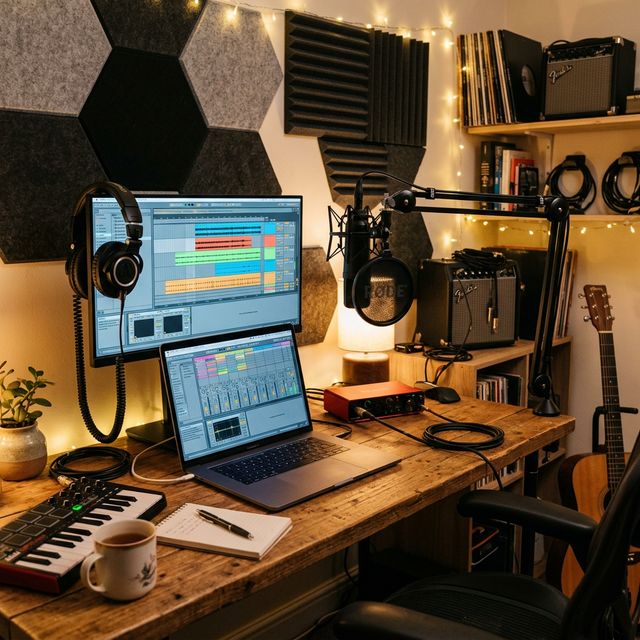
Connecting a drum machine to your existing recording setup is straightforward. Most modern machines offer USB audio, which means they show up as an audio interface in your DAW. Connect a single USB cable, arm a track, and record.
For machines with individual outputs, you will want a multi-channel audio interface to capture each drum sound on its own track. This gives you full mixing control over levels, panning, EQ, and compression for every element of your beat.
MIDI connectivity (either 5-pin DIN or USB) lets your drum machine sync with other hardware synths, sequencers, or your DAW’s tempo. Set the drum machine as the MIDI clock master, and everything in your studio locks to the same BPM automatically.
Final Thoughts
The best drum machine for a beatmaker is the one that gets out of your way and lets you focus on the groove. If you want deep sequencing and DAW integration, the Elektron Digitakt II is unmatched. If you want classic sounds with a hands-on performance interface, the Roland TR-8S delivers. If you want to make beats anywhere without a computer, the Teenage Engineering EP-133 fits in a backpack.
Stop scrolling through plugin presets and start tapping pads. The groove is in your hands, not your mouse.
Related Reading

Music Gear Specialist Review Desk
Research-based reviewsResearch-based reviews · Manufacturer specs · Verified owner feedback
We review guitars, amps, pedals, and recording gear the honest way: spec sheets, published measurements, and the collected experience of working musicians and verified owners.