How to Choose a Guitar Strap: Comfort and Security Guide
Find the best guitar strap for your instrument. This guide compares leather, nylon, and neoprene straps, strap locks, width, and padding in 2026.
Music Gear Specialist Review Desk
Gear Research & Analysis
ℹ️ Affiliate Disclosure: Music Gear Specialist earns from qualifying purchases through Amazon and other partner links. This doesn't affect our recommendations—we only suggest gear we'd use ourselves.
Choosing the right guitar strap is crucial for comfort and protecting your instrument from drops. The ideal strap balances weight distribution, using wide neoprene or padded leather, and locks securely using professional strap locks. This guide shows you how to select the best strap and locking system in 2026.
Executive Summary
| Strap Feature | Best For | Typical Price | Pros | Cons |
|---|---|---|---|---|
| Nylon/Polypro | Beginners & Light Guitars | $10 - $20 | Cheap, durable, many designs | No padding, can dig into neck |
| Leather/Suede | Classic look & Heavy Guitars | $30 - $100+ | Long-lasting, naturally grippy | Needs breaking in, expensive |
| Neoprene | Heavy Basses & Shoulder Pain | $25 - $50 | Excellent cushion, shock absorbing | Plain looks, retains moisture |
| Strap Locks | All Standing Players | $15 - $30 | Total drop protection | Requires installation |
Why is Choosing the Right Guitar Strap Important for Your Playing?
A bad guitar strap will ruin your practice sessions and could lead to your instrument crashing onto the floor. If you play standing up, the strap holds the entire weight of your instrument. A thin, unpadded strap will cut into your shoulder muscles, causing pain and making it hard to play for more than fifteen minutes.
Using the correct strap improves your playing posture. A good strap keeps the guitar in a stable position so your fretting hand does not have to support the neck. This lets your fingers move freely across the fretboard. Additionally, using secure attachment methods prevents costly repairs. Many headstock and neck repairs on acoustic guitars could be prevented by using a high-quality strap setup.
What are the Main Differences Between Leather, Nylon, and Neoprene Straps?
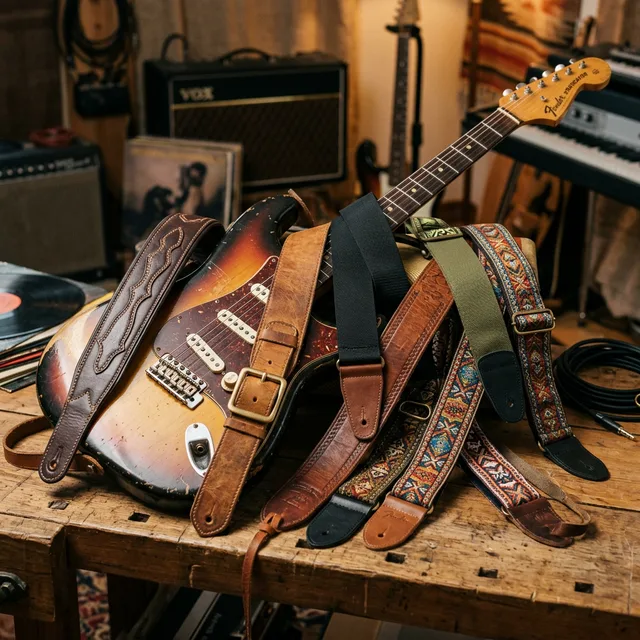
Nylon and polypropylene straps are the most common budget options. They are incredibly strong and slide easily across your shoulder. This is great if you like to move your guitar around while playing. The Ernie Ball Polypro Strap is a classic example that lasts for years. However, nylon has zero padding and will dig into your skin under the weight of a heavy guitar.
Leather and suede straps are favored by professional musicians. They look great, last a lifetime, and grip your shoulder to prevent the guitar neck from diving. The Levy’s Leathers 2.5-inch Suede Strap is soft, comfortable, and comes in many styles. Leather requires a break-in period before it softens, and premium leather can be expensive.
Neoprene straps are the top choice for heavy instruments and players with back pain. The KLIQ AirCell Guitar Strap uses air-filled neoprene pods to cushion your shoulder. The material stretches slightly, which absorbs the bounce of your movements as you walk on stage. The downside is that neoprene looks utilitarian and does not offer the classic look of leather.
How Do You Decide Between a Wide and Narrow Guitar Strap?
Standard guitar straps are 2 inches wide. This width is perfect for lighter instruments like a beginner acoustic guitar or a light electric guitar. A 2-inch strap offers enough support without feeling bulky. It fits easily in most guitar cases without taking up much room.
Heavy electric guitars and bass guitars require a wider strap. You should choose a strap that is 3 inches wide for these instruments. The extra inch of width increases the surface area on your shoulder. This spreads the weight of the guitar over a larger area, reducing the pressure on your shoulder muscles. If you use a narrow strap on a heavy instrument, it acts like a wire cutting into your skin.
Why is Padding Essential for Heavy Guitars and Basses?
Padding makes a massive difference in how long you can play without fatigue. A heavy solid-body electric guitar can weigh between 8 and 10 pounds. A bass guitar is often even heavier. Without padding, the weight creates a pressure point on the trapezius muscle in your shoulder.
High-quality padded straps use memory foam, neoprene, or thick felt. The padding cushions the shoulder and prevents the strap from cutting into your neck. When selecting a padded strap, look for one where the padding extends all the way through the shoulder area. Make sure the padding is not too stiff, as it needs to contour to the shape of your body.
How Do You Adjust a Guitar Strap to the Correct Length?
Adjusting the length of your strap determines the height and angle of your guitar. If you hang the guitar too low, your fretting wrist must bend at an extreme angle. This makes it difficult to play complex chords and can lead to wrist pain. If you hang the guitar too high, it can feel awkward and restrict your strumming arm.
A great starting point is to adjust the strap while sitting down. Sit with your guitar in a comfortable playing position. Adjust the strap until it is snug against your shoulder. When you stand up, the guitar should remain at the exact same height. This ensures that your muscle memory stays consistent whether you are practicing on a chair or performing on stage.
What is the Difference Between Schaller and Dunlop Strap Locks?
Strap locks replace your standard guitar buttons with locking mechanisms that prevent the strap from slipping off. The two industry standards are Schaller and Dunlop. Both systems work incredibly well, but they attach to your strap and guitar in different ways.
The Schaller S-Locks feature a solid cup design. The lock slides over the guitar button from the top and is held in place by a spring-loaded pull pin. The metal cup supports the weight of the guitar even if the locking pin fails. They are very quiet and do not rattle.
The Dunlop Straplok System uses a ball-bearing quick-release mechanism. The lock inserts directly into the center of the guitar button. You press a button on the end to release the mechanism. The Dunlop system allows the strap to rotate 360 degrees freely, which some players prefer.
Do You Need Premium Leather Straps or Budget Nylon Options?
If you are just starting and playing a lightweight instrument, a budget nylon strap is perfectly fine. You can spend the extra money on learning materials or a better amplifier. Nylon is also easy to pack away and comes in hundreds of colors and patterns.
If you plan to perform live or own a heavy instrument, investing in a premium leather strap is highly recommended. Leather grips your clothing, which helps keep the guitar in a stable playing position. This is especially helpful for guitars that suffer from “neck dive,” where the headstock pulls the neck downward. A leather strap will also soften over the years, becoming more comfortable the more you use it.
How Can You Prevent Your Guitar Strap from Slipping Off the Buttons?
If you do not want to install metal strap locks, there are cheaper ways to secure your strap. The easiest option is using rubber strap washers, often called “strap blocks.” These are small rubber rings that you stretch over your standard strap buttons after you have put the strap on. They act as a cheap barrier that prevents the leather strap hole from slipping off the button.
Another option is to use a strap with built-in locking ends. These straps have plastic locking mechanisms sewn into the ends. They clip onto your existing guitar buttons without requiring you to change any hardware on your instrument. They are convenient if you want to use one strap across multiple guitars.
What Style of Guitar Strap Attachment is Safest for Acoustic Guitars?
Most acoustic guitars only have a single strap button at the bottom of the body. To attach a strap to the headstock end, you have two choices. The traditional method is to tie the strap to the headstock using a piece of cord wrapped under the strings just behind the nut. This holds the guitar securely but can put pressure on the truss rod area.
The modern method is using a quick-release headstock loop. These loops wrap around the headstock and clip into the strap with a quick-release buckle. If your acoustic guitar has a second button installed on the heel of the neck, you can attach the strap there. This is much more comfortable as it keeps the strap away from your fretting hand. Make sure to check our guide on how to change guitar strings if you need to access the headstock area easily.
How Do You Care for and Maintain a Leather Guitar Strap?
Leather is a natural material that can dry out and crack over time. If you sweat on your leather strap during hot gigs, the moisture and salt can damage the leather. To keep it in good condition, you should clean it occasionally with a damp cloth.
Apply a small amount of leather conditioner once a year. This keeps the leather soft and prevents it from cracking. Keep your strap stored flat or loosely rolled up rather than folded. Folding can create permanent creases in the leather that weaken the material. If you take care of a high-quality leather strap, it will outlast the guitar itself.
FAQ
What is the best guitar strap material for shoulder pain?
Neoprene is the best material for shoulder pain. It has elastic qualities that distribute the weight of the guitar across your shoulder, absorbing shock as you move. Thick padded leather straps are also excellent, but neoprene offers the most pressure relief for heavy instruments.
Do you really need strap locks?
Yes, you need strap locks if you play standing up. Standard guitar strap buttons can slip out of the strap holes as the leather wears down. Strap locks lock the strap to the guitar body, preventing the instrument from falling and sustaining expensive neck cracks or body damage.
How wide should a bass guitar strap be?
A bass guitar strap should be 3 inches wide. Bass guitars are heavier than electric guitars, and a wider strap spreads the heavy load across a larger surface area on your shoulder. For lighter guitars, a 2-inch strap is usually sufficient.
Can you use electric guitar strap locks on an acoustic guitar?
Yes, you can install strap locks on an acoustic guitar if it has standard strap buttons. However, if your acoustic guitar has an endpin jack for an acoustic pickup, you will need a specialized acoustic strap lock or adapter that fits over the larger jack button.
How low should you hang your guitar?
You should hang your guitar at a height where your wrists do not bend at extreme angles. A good test is to adjust the strap so the guitar sits in the same position when standing as it does when you are sitting. Hanging the guitar too low can cause wrist strain and tendonitis.
Actionable Conclusion
To choose the perfect guitar strap, start by assessing the weight of your guitar. If you play a heavy instrument or suffer from shoulder discomfort, choose a 3-inch padded leather or neoprene strap. If you play a light guitar, a standard 2-inch nylon strap will work well. Always install a set of strap locks like Schaller S-Locks or Dunlop Straploks to protect your investment. A secure and comfortable strap allows you to focus on your playing without distraction or pain.

Music Gear Specialist Review Desk
Research-based reviewsResearch-based reviews · Manufacturer specs · Verified owner feedback
We review guitars, amps, pedals, and recording gear the honest way: spec sheets, published measurements, and the collected experience of working musicians and verified owners.