How to Choose a Yamaha Guitar: Best Budget and Premium Models
Discover the best Yamaha electric and acoustic guitars. Compare Pacifica, Revstar, FG, FS, and TransAcoustic models to find your perfect fit.
Music Gear Specialist Review Desk
Gear Research & Analysis
ℹ️ Affiliate Disclosure: Music Gear Specialist earns from qualifying purchases through Amazon and other partner links. This doesn't affect our recommendations—we only suggest gear we'd use ourselves.
To choose the right Yamaha guitar, you must first decide between their electric and acoustic lineups, then select the body shape that matches your playing comfort. Yamaha is legendary for offering class-leading quality control and premium specs at prices that beat traditional American guitar brands.
This is a research-desk chooser, not a Hamamatsu bench. FG / FS / Pacifica / THR notes below come from Yamaha’s published series pages and the listing twins Amazon keeps collapsing into one “Yamaha guitar” thumbnail. Music Gear Specialist Review Desk is not scoring a house fleet.
Executive Summary
Before committing to a Yamaha guitar, review these essential details:
- Pacifica Series offers versatile Strat-style electric guitars, featuring an HSS pickup layout that is perfect for students and gigging guitarists.
- Revstar Series delivers double-cut solidbodies with chambered mahogany frames, custom-wound pickups, and a passive bass-cut filter called the Dry Switch.
- FG vs. FS represents Yamaha’s core acoustic division. FGs use a large dreadnought body for strong volume and bass, while FS models feature a smaller concert body suited for fingerstyle.
- TransAcoustic Technology adds built-in reverb and chorus effects to acoustic guitars without requiring any external amplifiers or effects pedals.
- Built for Durability is a hallmark of the brand, making their entry-level instruments highly reliable tools that stay in tune.
What Makes Yamaha Guitars a Consistent Choice for Beginners and Professionals?
Yamaha has earned a reputation for build consistency. In high-volume manufacturing, budget instruments often suffer from sharp fret edges, poor intonation, or loose hardware. Yamaha maintains strict quality standards across all price brackets, ensuring that their budget models perform reliably out of the box.
For beginners, a reliable instrument is crucial. If a guitar is hard to press down or will not stay in tune, the student will struggle and likely quit. Yamaha’s budget models, like the FG800 acoustic or the Pacifica 012 electric, feature comfortable neck shapes and consistent setups.
For professionals, Yamaha offers premium Japanese-made instruments. The Revstar Professional electrics and L-Series acoustics are hand-crafted by master luthiers, offering top-tier woods and hardware. Yamaha avoids the vintage-obsessed design limits of other manufacturers, choosing instead to focus on modern ergonomic playability and advanced acoustic engineering.
If you are looking for general starter advice, check out our guide on acoustic vs electric guitar for beginners.
How Do You Choose Between the Different Yamaha Pacifica Models?
The Pacifica series is one of the best-selling electric guitar lines in history. These Stratocaster-style double-cutaway guitars feature a bolt-on neck design and are widely known for their versatility.
The entry-level models are the Pacifica 012 and 112J. The Pacifica 012 uses a cheaper agathis wood body, while the Pacifica 112J upgraded to a solid alder body. Both models use an HSS pickup configuration, meaning they have a humbucker pickup in the bridge position and two single-coil pickups in the middle and neck positions. This layout allows you to play heavy rock, clean pop, or warm blues on a single instrument.
The Yamaha Pacifica 112V is the sweet spot for budget electrics. It features upgraded Alnico V pickups, block saddles on the tremolo bridge, and a push-pull coil tap on the tone knob that splits the humbucker into a single-coil. This is an exceptional option for any player looking for the best beginner electric guitar under $300.
For professional features, the Pacifica 612 and the elite Pacifica Professional models offer Seymour Duncan pickups, Graph Tech nuts, Grover locking tuners, and Wilkinson tremolos. These models compete directly with American-made guitars costing twice as much.
What is the Yamaha Revstar Series and Who is It For?
Introduced as a modern take on double-cut guitars, the Revstar series draws aesthetic inspiration from vintage café racer motorcycles. These guitars feature mahogany bodies, set-neck construction, and a thicker, warmer sound compared to the Pacifica.
Yamaha organizes the Revstar line into three tiers: Element, Standard, and Professional. The Element series, including the Revstar Element RSE20 (RSE20), uses a solid mahogany body and humbucker pickups. The Standard and Professional series models feature chambered mahogany bodies with carbon reinforcement rods inside the neck and body. This chambering reduces weight and boosts natural acoustic resonance.
Revstar guitars come with either custom-wound humbuckers or P90-style single-coil pickups. They also feature a passive push-pull circuit. Standard and Professional models use the Focus Switch, a passive transformer that boosts mids and rolls off highs, giving the guitar a thick, pre-driven tone. Element models use the Dry Switch, which cuts low frequencies for a brighter, single-coil-like chime. The Revstar is perfect for rock, blues, and jazz guitarists who want a warm, sustain-heavy instrument that stands out from standard designs.
What Are the Differences Between Yamaha FG and FS Acoustic Guitars?
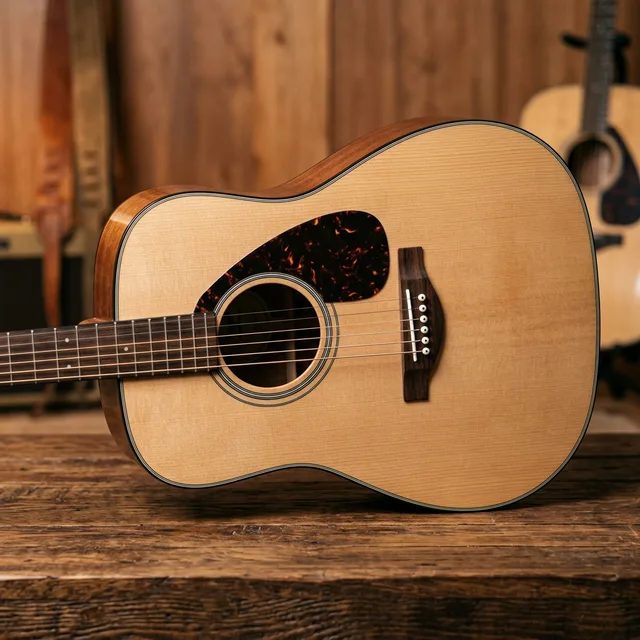
If you are looking for an acoustic guitar, Yamaha’s FG and FS lines are the gold standards. Both lines feature solid spruce tops in their entry-level models, which is rare at budget price points. A solid wood top vibrates more freely than a laminated top, producing a richer, louder tone that matures over time.
The FG series (which stands for Folk Guitar) features a traditional dreadnought body shape. These guitars have a large, deep body that projects a loud sound with prominent bass frequencies. The Yamaha FG800 is the base model and is widely regarded as one of the best acoustic instruments available for the money.
The FS series (which stands for Folk Small) features a concert-style body shape. These guitars are thinner and have a narrower waist than the FG models. They produce a brighter, more focused tone with stronger mid-range presence. The smaller body is easier to hold, making it ideal for younger players, smaller adults, and fingerstyle guitarists.
If you are trying to find the right starter acoustic, read our list of the best acoustic guitars for beginners.
How Does Yamaha TransAcoustic Technology Work?
Yamaha’s TransAcoustic (TA) guitars represent a modern innovation in acoustic instrument design. These guitars feature built-in effects that you can hear directly from the guitar body without plugging into an amplifier.
The system works using a small metal actuator installed inside the back of the guitar. When you pluck a string, the actuator vibrates in response. These vibrations are transferred to the guitar body and the air inside, producing real acoustic reverb and chorus.
The controls are simple, consisting of three knobs mounted on the side of the body: Reverb Room/Hall, Chorus, and a Volume control if you decide to plug the guitar into an amplifier. When unplugged, the effects blend naturally with the acoustic voice of the instrument, making practice sessions and small room performances sound lush and professional. The TA technology is available in both FG dreadnought, FS concert, and nylon-string classical bodies.
Should You Buy a Yamaha L Series or A Series Acoustic Guitar?
For intermediate and advanced players, Yamaha offers two premium acoustic lines: the A Series and the L Series.
The A Series is designed specifically for performing gigging musicians. These guitars feature cutaway bodies for upper-fret access and the SRT (Studio Response Technology) pickup system. The SRT preamp uses digital modeling to blend your bridge pickup signal with the acoustic microphone profiles of famous studio mics, giving you a natural acoustic tone through a PA system without feedback.
The L Series (which stands for Luxury) is designed for traditional acoustic purists. These guitars feature premium solid tonewoods, including solid Engelmann spruce tops and solid rosewood back and sides. Many L Series models use Yamaha’s Acoustic Resonance Enhancement (ARE) process. This process uses precise temperature and moisture control to age the wood, giving a brand-new guitar the open, resonant tone of a well-played 30-year-old instrument.
If you perform live through amplifiers frequently, choose the A Series. If you want the finest acoustic tone for recording and home play, choose the L Series.
How Do Yamaha Classical and Silent Guitars Perform?
Yamaha is also a leading manufacturer of nylon-string classical guitars and specialized travel instruments.
The CG and C series classical guitars are popular in school music programs. The C40 II is an industry-standard entry-level classical guitar, featuring a wide neck and gentle nylon strings that are comfortable for young hands. Higher-end models like the CG192 offer solid spruce or cedar tops and traditional rosewood bodies for classical and flamenco styles.
The Silent Guitar (SLG) series features a skeleton frame made of maple, with no acoustic body cavity. This design makes the guitar almost completely silent when unplugged, allowing you to practice through headphones without disturbing anyone. The built-in pickup system replicates a natural acoustic tone through headphones or an amplifier. The wood frames can be detached, making the Silent Guitar incredibly compact for air travel.
Is a Yamaha Guitar Worth It Compared to Brands Like Fender and Ibanez?
Yamaha guitars compete directly with major brands like Fender, Squier, Ibanez, and Epiphone.
In the budget electric market, the Pacifica series often outperforms equivalent Squier models. While Squiers offer classic vintage looks, Pacificas generally provide superior tuning stability and a more versatile HSS pickup layout. In the mid-range electric market, the chambered Revstar models offer a unique sonic alternative to Epiphone Les Pauls, featuring lighter bodies and the versatile Dry and Focus switches.
In the acoustic market, Yamaha has long outperformed Fender and Ibanez. Yamaha’s focus on solid wood tops and robust bracing gives models like the FG800 a richer, louder tone than Fender’s CD-60 or Ibanez’s Artwood starter models. Yamaha’s quality control ensures that neck angles and fret levels are consistent, which is crucial for acoustic playability.
If you appreciate vintage brand legacy and classic aesthetics, you may prefer a Fender or Gibson design. However, if you want the best possible build quality, hardware specs, and playability for your money, Yamaha is tough to beat.
Buying notes (what to check before you click)
Listing checks Amazon copy skips. FG800 / FS800 / Pacifica / THR street prices on this page are a research snapshot, not a live offer.
Use-case fit
- Steel-string folk, dreadnought volume: Yamaha FG800. Smaller concert body, mid-focused: Yamaha FS800. Same solid-spruce-top recipe, two body checkouts.
- First electric, HSS versatility: Yamaha Pacifica 112V. Apartment amp after that electric is a Yamaha THR / modeling lane — tube vs solid-state amps — not a boutique tube head.
- Martin is the other steel-string heritage fork, not an FG800 twin: how to choose a Martin guitar.
When to skip / when to buy
- Skip buying a classical if you want steel-string folk. A Yamaha C40 is nylon, wide-neck, and a school-program guitar — not an FG800 with softer strings.
- Skip a TransAcoustic listing if you only wanted a dry FG800. The side knobs and actuator are a different SKU and battery job.
- Skip a Pacifica 012 photo titled as a 112V. Agathis vs alder and the Alnico / coil-tap jump are the checkout.
- Buy FG800 for dreadnought folk. Buy FS800 for a smaller frame. Buy Pacifica 112V for electric. Buy THR / Katana-class modeling if the room cannot take a tube combo.
Listing checks the product title usually omits
- FG800 vs FS800 vs Pacifica / THR. “Yamaha guitar” in a thumbnail can be a dreadnought, a concert acoustic, a Strat-style electric, or a desktop modeling amp.
- FG vs FS. Folk vs Folk Small — waist and bass, not a finish code.
- Pacifica 012 vs 112J vs 112V vs 612. Body wood, pickups, and hardware are the price jump.
- C / CG classical vs FG steel. Nylon and a wider nut are not “beginner acoustic” as a generic.
- Left-hand and TransAcoustic (
TA) suffixes. The hero shot is usually a right-hand dry FG800.
Next reads: guitars hub · amps hub · best music gear roundups.
FAQ
Are Yamaha guitars good for beginners?
Yes, Yamaha guitars are famous for having exceptional quality control at budget-friendly price points. Models like the Pacifica 112V for electric and the FG800 for acoustic offer excellent playability, tuning stability, and tone, making them the industry standard recommendations for beginners.
What is the difference between Yamaha FG and FS acoustic guitars?
Yamaha FG acoustic guitars feature a traditional western dreadnought body shape that offers louder volume and deep bass. Yamaha FS guitars have a smaller, concert-style body that provides a brighter, more mid-focused tone and is more comfortable for smaller players and fingerstyle techniques.
How does the dry switch work on Yamaha Revstar guitars?
The dry switch on Yamaha Revstar guitars is a passive high-pass filter activated by a push-pull tone knob. It filters out low frequencies without adding noise, offering a brighter, clearer tone similar to a single-coil pickup while using humbuckers.
Is the Yamaha Pacifica better than a Squier Stratocaster?
Yamaha Pacifica guitars generally offer better hardware and build consistency for the price, featuring a bridge humbucker that makes them more versatile for heavier genres. Squier Stratocasters offer more vintage-correct styling and a classic Fender tone.
How does Yamaha TransAcoustic technology work?
Yamaha TransAcoustic guitars use an actuator installed inside the body that vibrates in response to string vibration. This allows the guitar to produce real reverb and chorus effects directly from its acoustic body without being plugged into an amplifier.
Conclusion
Choosing a Yamaha guitar comes down to identifying your musical style and body comfort. If you want a versatile electric to learn all styles, buy a Pacifica 112V. If you want a thick rock crunch with vintage-modern aesthetics, look at the chambered Revstar Standard. For acoustic players, choose the FG800 dreadnought for bold acoustic projection, the FS800 concert shape for a smaller frame, or a TransAcoustic model to experience rich reverb and chorus effects anywhere you play.
Related Reading

Music Gear Specialist Review Desk
Research-based reviewsResearch-based reviews · Manufacturer specs · Verified owner feedback
We review guitars, amps, pedals, and recording gear the honest way: spec sheets, published measurements, and the collected experience of working musicians and verified owners.