Best Guitar Microphones for Recording Amps and Acoustic Guitar
Best guitar microphones for recording electric amps, acoustic guitar, and home-studio tracks, with dynamic, condenser, USB, and no-stand picks.
Music Gear Specialist Review Desk
Gear Research & Analysis
ℹ️ Affiliate Disclosure: Music Gear Specialist earns from qualifying purchases through Amazon and other partner links. This doesn't affect our recommendations—we only suggest gear we'd use ourselves.
ℹ️ Affiliate Disclosure: Music Gear Specialist earns from qualifying purchases through Amazon and other partner links. This doesn't affect our recommendations—we only suggest gear we'd use ourselves.
The Shure SM57 is still the safest first microphone for recording electric guitar, but it is not the only useful option. A no-stand dynamic like the Sennheiser e609 can be easier on a small amp, a condenser is better for acoustic guitar detail, and a USB mic can make sense when you are recording ideas without a full interface.
TL;DR: The Shure SM57 is the best first electric-guitar amp mic for most home studios. The Sennheiser e609 is the easy no-stand alternative, the Rode NT1-A is the cleaner acoustic-guitar condenser pick, and the Audio-Technica AT2020USB-X is the simplest USB route if you do not want an interface yet.
Best Mic for Recording Electric Guitar
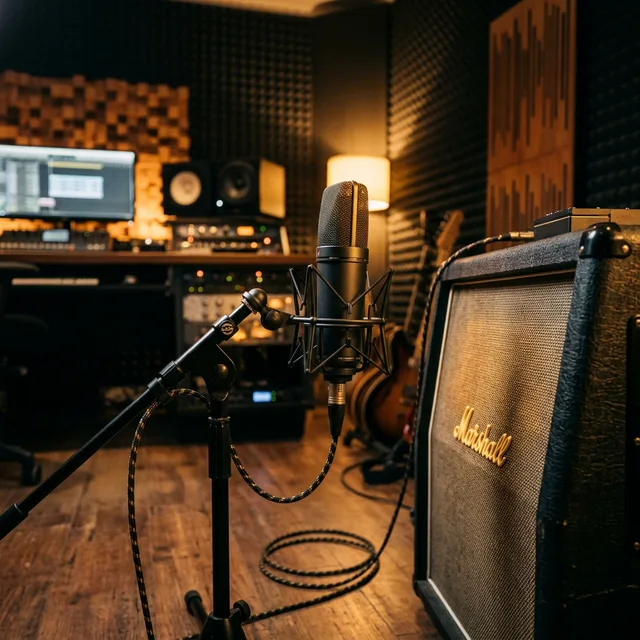
The best mic for recording electric guitar is still the Shure SM57. It is cheap enough for home studios, tough enough for loud cabinets, and focused in the exact midrange where electric guitar has to cut through bass, drums, vocals, and cymbals.
If you are recording a real amp at home, start with one dynamic mic before buying stereo pairs or expensive condensers. Place the mic one or two inches from the grille, aim it where the dust cap meets the speaker cone, and move it outward if the tone is too bright. That placement change matters more than swapping to a more expensive microphone.
| Electric guitar recording need | Best mic | Why |
|---|---|---|
| Most guitar amps | Shure SM57 | Classic midrange bite, handles high SPL, easy to mix |
| No mic stand | Sennheiser e609 | Flat body hangs over a cab and rejects room noise |
| Smoother premium tone | Shure SM7B | Fuller low mids and less harsh top end |
| Budget acoustic plus electric | Audio-Technica AT2020USB-X | Works without an interface, but less ideal for loud cabinets |
For the full placement workflow, use this roundup with our how to mic a guitar amp guide and the home guitar recording guide.
Our Top Picks
Shure SM57, Best for Electric Guitar
Price tier: Budget studio staple | Type: Dynamic | Pattern: Cardioid | Connection: XLR
The SM57 is the default first amp mic because Shure designs it for high sound-pressure instrument sources and a contoured response that suits amplified instruments. Its cardioid pattern helps reject room spill, and its midrange emphasis usually makes distorted and clean guitar easier to place in a dense mix.
Best for: Electric guitar amp recording, live sound, all-around studio workhorse.
Check current Shure SM57 availability
Rode NT1-A, Best for Acoustic Guitar
Price tier: Midrange condenser | Type: Large-diaphragm condenser | Pattern: Cardioid | Connection: XLR
The NT1-A is the acoustic-guitar pick when the room is quiet and you want more detail than a dynamic mic gives you. Rode lists it as a cardioid studio condenser with very low 5 dBA self-noise, which is useful for softer fingerpicking and singer-songwriter parts where hiss becomes obvious.
Best for: Acoustic guitar recording, vocals, singer-songwriter recording.
Audio-Technica AT2020USB-X, Best USB Mic
Price tier: Budget USB | Type: Condenser | Pattern: Cardioid | Connection: USB-C
No audio interface required. The current AT2020USB-X plugs directly into a computer over USB-C and includes a headphone jack, direct monitoring, mix control, and a mute button. It is most useful for acoustic guitar, scratch tracks, and amp-sim workflows rather than loud guitar cabinets.
Best for: Beginners, podcast-to-guitar-recording setup, no-interface recording.
Check current Audio-Technica AT2020USB-X availability
Sennheiser e609, Best for Amp Recording (No Stand)
Price tier: Budget/mid dynamic | Type: Dynamic | Pattern: Supercardioid | Connection: XLR
The e609’s flat body is the convenience play: hang it over the front of a guitar cabinet when a stand will not fit. Sennheiser lists the e 609 Silver as a dynamic, supercardioid, wired XLR instrument mic with a rugged metal body, shock-mount design, and hum-compensating coil.
Best for: Live amp miking, rehearsal recording, stand-free convenience.
Check current Sennheiser e609 availability
AKG P170, Best Budget Condenser
Price tier: Budget condenser | Type: Small-diaphragm condenser | Pattern: Cardioid | Connection: XLR
Small-diaphragm condensers excel at capturing the transient detail and high-frequency shimmer of acoustic guitars. AKG lists the P170 as a cardioid small-diaphragm instrument condenser with a 20 Hz to 20 kHz frequency range, a -20 dB pad, and XLR output.
Best for: Budget acoustic recording, overhead drum mics, instrument recording.
Shure SM7B, Best Premium Dynamic
Price tier: Premium dynamic | Type: Dynamic | Pattern: Cardioid | Connection: XLR
The SM7B is the premium dynamic option when an SM57 feels too forward or edgy. Shure lists it with a smooth, wide-range response, electromagnetic-hum shielding, and switchable response shaping, which makes it useful on vocals, spoken word, and smoother guitar-amp tones.
Best for: Premium amp recording, vocals, broadcast, all-purpose studio mic.
Check current Shure SM7B availability
What to Look For in a Guitar Recording Microphone
Choosing the right microphone for guitar is less about brand prestige and more about matching the mic type to what you’re recording and where you’re recording it.
Dynamic vs condenser: Dynamic microphones (Shure SM57, Sennheiser e609) are the workhorses of guitar cabinet recording because they tolerate loud sources and reject more room noise. Condenser microphones (Rode NT1-A, AKG P170, AT2020USB-X) are more sensitive, capturing the nuanced transients and air of an acoustic guitar beautifully, but they will pick up every rattle and hum in your room.
Polar pattern: Cardioid mics pick up sound from the front and reject rear/side noise, ideal for isolated recording. Super-cardioid (like the e609) provides even tighter rejection but requires more precise mic placement. For home studios with acoustic treatment challenges, tighter polar patterns mean less room sound in your recordings.
Phantom power: Condenser mics require 48V phantom power from your audio interface or mixer. If you’re buying your first condenser, verify your interface provides phantom power before purchasing, all modern interfaces do, but some budget analog mixers don’t.
Placement fundamentals: With any microphone on a guitar cabinet, the sweet spot is usually 1-4 inches from the speaker cone, angled slightly off-axis to reduce harshness. Moving the mic from the center (brighter, more attack) toward the edge (warmer, fuller) gives significantly different tones, a technique worth experimenting with before adding any EQ.
USB vs XLR: USB condenser mics (AT2020USB-X) are plug-and-play without an audio interface, ideal for beginners. XLR mics require an interface but give you more control and can be upgraded with better preamps over time. If you plan to record seriously, invest in XLR from the start.
Buying notes (what to check before you click)
Listing checks Amazon copy skips. SM57 / e609 / NT1-A street prices on this page are a research snapshot, not a live offer.
Use-case fit
- First electric-amp track in a bedroom: Shure SM57, 1–2 inches off the grille. Search the instrument dynamic, not a vocal twin: Shure SM57. Placement walkthrough: how to mic a guitar amp.
- No stand, small combo: Sennheiser e609 hung on the cab. Supercardioid, not a vocal SM58 clip.
- Quiet-room acoustic or Taylor session: large-diaphragm condenser (NT1-A), not a cab dynamic. Brand path: how to choose a Taylor guitar.
- No interface yet: AT2020USB-X for scratch acoustics and amp-sims. Loud cabinets still want XLR + an interface.
When to skip / when to buy
- Skip an SM7B as a first amp mic. It is a smoother premium dynamic and often wants more gain than a first Scarlett channel.
- Skip a USB condenser on a loud 1×12. Capsules and rooms are the problem, not a missing Cloudlifter.
- Skip a stereo pair before you can place one SM57. Distance and dust-cap angle beat a second SKU.
- Buy the SM57 if the job is a guitar cabinet. Buy the NT1-A if the job is a quiet acoustic and you already have 48V.
Listing checks the product title usually omits
- SM57 vs SM58 vs e609. 57 is the instrument dynamic; 58 is the vocal ball; e609 is the flat cab hanger.
- XLR vs USB-C. “AT2020” in a thumbnail can be either the XLR condenser or the USB-X.
- Cardioid vs supercardioid. The e609 rejects more off-axis room — and punishes sloppy aim.
- Bundle “with stand and cables” vs mic-only. A $99 kit is often a no-name boom and a coiled XLR.
- Phantom-power need. Condensers want 48V; the SM57 does not.
A playable guitar still records better than a nicer mic on a buzzing neck — how to set up a guitar. Next reads: recording hub · best music gear roundups.
Microphone Comparison
| Mic | Price tier | Type | Pattern | Best For |
|---|---|---|---|---|
| AKG P170 | Budget | SDC | Cardioid | Budget acoustic |
| Shure SM57 | Budget | Dynamic | Cardioid | Electric amp |
| Sennheiser e609 | Budget/mid | Dynamic | Supercardioid | Live amp |
| AT2020USB-X | Budget USB | Condenser | Cardioid | USB recording |
| Rode NT1-A | Midrange | LDC | Cardioid | Acoustic guitar |
| Shure SM7B | Premium | Dynamic | Cardioid | Premium studio |
Keep Reading
- Best Audio Interfaces, you need one for XLR mics
- How to Record Guitar at Home, complete recording setup guide
- How to Mic a Guitar Amp, practical speaker placement guide
- Best Studio Headphones, monitor your recordings
Sources Checked
- Shure SM57 official product page
- Sennheiser e 609 Silver official product page
- Shure SM7B official product page
- Rode NT1-A official product page
- Audio-Technica AT2020USB-X official product page
- AKG P170 official product page
FAQ
What is the best mic for recording electric guitar?
The Shure SM57 is the best mic for recording electric guitar for most players because it handles loud guitar cabinets, rejects room noise, and emphasizes the midrange where electric guitars sit in a mix. The Sennheiser e609 is easier to hang over a cabinet, and the Shure SM7B is a smoother premium option.
We select and review gear independently. To learn more about our testing process, read our Editorial Policy.

Music Gear Specialist Review Desk
Research-based reviewsResearch-based reviews · Manufacturer specs · Verified owner feedback
We review guitars, amps, pedals, and recording gear the honest way: spec sheets, published measurements, and the collected experience of working musicians and verified owners.