Acoustic vs Electric Guitar: Which to Learn First
Acoustic or electric guitar for beginners? A straight answer based on your goals, hand size, music taste, and budget.
Music Gear Specialist Review Desk
Gear Research & Analysis
ℹ️ Affiliate Disclosure: Music Gear Specialist earns from qualifying purchases through Amazon and other partner links. This doesn't affect our recommendations—we only suggest gear we'd use ourselves.
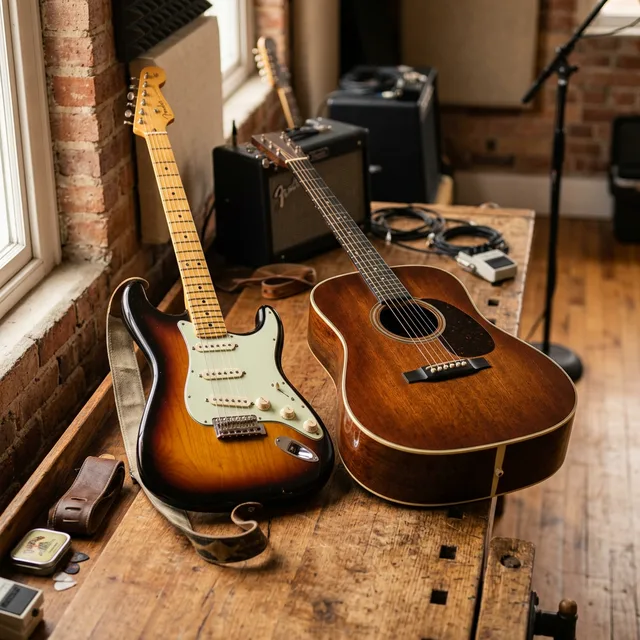
Every guitar teacher has heard this question a thousand times: “Should I start with acoustic or electric?” And every guitar forum is full of passionate, contradictory opinions from people who are really just telling you what worked for them.
Here is the truth that cuts through the noise: the best guitar for a beginner is the one that makes you want to pick it up every day. Everything else, the string gauge, the neck width, the tonal versatility, is secondary to whether the instrument excites you enough to push through the frustrating first three months.
That said, there are real, practical differences between acoustic and electric guitars that affect your learning experience. Let me lay them out honestly so you can make a decision based on facts instead of forum arguments.
The Physical Differences That Matter for Beginners
String Tension and Finger Pain
Acoustic guitars use heavier strings (typically .012-.053 gauge) at higher tension to produce enough volume acoustically. These strings dig into uncalloused fingertips and require more pressure to fret cleanly. The first two weeks of playing acoustic guitar involve genuine finger pain that makes you want to quit.
Electric guitars use lighter strings (typically .009-.042 gauge) at lower tension because the pickups amplify the vibration electronically. Fretting notes requires less pressure, barre chords are less exhausting, and bending strings is dramatically easier. The initial finger discomfort is milder and resolves faster.
Reality check: Every guitarist develops calluses within 2-4 weeks regardless of the instrument type. The initial pain difference is real but temporary. If you are drawn to acoustic music, do not let two weeks of sore fingertips push you toward an electric guitar you do not actually want to play.
Neck Width and Hand Size
Acoustic guitar necks are generally wider at the nut (1.72 inches to 1.75 inches) than electric guitar necks (1.65 inches on most Fender-style instruments). This affects how far your fingers need to stretch for chord shapes, especially barre chords that span all six strings.
Players with smaller hands often find electric guitar necks more comfortable. But “small hands” is one of the most overused excuses in guitar. Children as young as seven learn to play full-size guitars with proper technique. If your fingers can type on a keyboard, they can play any guitar with practice.
Portability and Convenience
An acoustic guitar is ready to play the moment you pick it up. No amp, no cables, no power outlet required. You can practice on the couch, take it to a campfire, play on a park bench, or bring it to a friend’s house without hauling additional gear.
An electric guitar needs an amplifier to hear yourself properly. An unplugged electric guitar produces a thin, quiet sound that obscures your mistakes and makes practice less effective. This means additional expense ($50-$150 for a beginner amp) and a slightly less convenient practice setup.
For apartment dwellers and late-night practicers, electric guitar with a headphone amp is actually quieter than acoustic guitar. You can play silently through headphones at 2 AM without disturbing anyone.
What Your Musical Goals Should Tell You
This is the most important section in this entire article.
Start with Acoustic If You Want To:
- Play singer-songwriter music (Ed Sheeran, Taylor Swift, John Mayer acoustic stuff)
- Play fingerpicking and classical styles
- Strum chords around a campfire or at open mics
- Write songs with just your voice and a guitar
- Play folk, country, or bluegrass music
- Have a grab-and-go instrument with no additional gear needed
A solid beginner acoustic guitar from Yamaha, Fender, or Taylor in the $200-$400 range will handle all of these goals beautifully. The Yamaha FG800 remains the gold standard starter acoustic: solid spruce top, good intonation, and a reputation for staying in tune that budget acoustics rarely achieve.
Start with Electric If You Want To:
- Play rock, blues, metal, punk, or jazz
- Learn lead guitar, solos, and shredding techniques
- Use effects pedals, distortion, and wah
- Play in a band with a drummer and bass player
- Record direct into a computer through an audio interface
- Experiment with different tones and sounds
The electric guitar’s lower string tension makes techniques like hammer-ons, pull-offs, slides, and bending significantly easier to learn. If your heroes play electric guitar, start with electric guitar. Full stop.
Best beginner electric: The Squier Classic Vibe ’50s Stratocaster ($400) punches way above its weight with Alnico pickups, a comfortable neck, and the versatility to handle any genre from clean jazz to crunchy blues rock. Pair it with a Boss Katana 50 MkII ($250) for a practice amp that doubles as a gigging amp.
The Myth of “Start Acoustic, Then Switch”
Older guitar teachers and well-meaning parents often insist that beginners should learn acoustic first and “graduate” to electric later. This advice comes from a reasonable-sounding but flawed premise: that acoustic guitar builds more finger strength and discipline, creating a stronger foundation.
Here is why this argument falls apart:
Acoustic and electric guitars use different techniques. Acoustic playing emphasizes open chords, strumming patterns, and fingerpicking. Electric playing emphasizes power chords, palm muting, bending, vibrato, and effects-based tones. Starting on one does not automatically prepare you for the other.
Bored students quit. If a kid wants to play Metallica and you hand them an acoustic guitar and tell them to learn “Kumbaya,” they will quit within a month. The single most important factor in learning guitar is consistent daily practice, and consistent daily practice requires motivation, and motivation comes from playing music you actually care about.
Professional guitarists started on both. Jimi Hendrix started on a one-string ukulele. Mark Knopfler started on a cheap acoustic. Slash started on a one-string guitar made from a broom handle. Eddie Van Halen started on piano. There is no universal starting point that produces great guitarists.
The Budget Breakdown
Acoustic Starter Kit (Under $300)
| Item | Cost |
|---|---|
| Yamaha FG800 acoustic guitar | $220 |
| Guitar picks (variety pack) | $5 |
| Clip-on tuner | $12 |
| Guitar strap | $10 |
| Extra strings (2 sets) | $15 |
| Capo | $10 |
| Total | $272 |
Electric Starter Kit (Under $500)
| Item | Cost |
|---|---|
| Squier Affinity Stratocaster | $250 |
| Fender Frontman 10G amp | $50 |
| Guitar cable (10 ft) | $10 |
| Guitar picks (variety pack) | $5 |
| Clip-on tuner | $12 |
| Guitar strap | $10 |
| Extra strings (2 sets) | $12 |
| Total | $349 |
The electric kit costs more because of the amplifier, but both options are well within reach for most budgets. Used gear can cut these prices by 30-40%. Check Facebook Marketplace and Reverb for local deals.
What About Classical (Nylon String) Guitars?
Classical guitars use nylon strings instead of steel strings, which are significantly easier on the fingertips. The neck is wider and flat, which gives each finger more room but requires a wider stretch. Classical guitars are excellent for:
- Children under 10 (the nylon strings are gentle on small fingers)
- Players interested in classical, flamenco, or Latin music
- Players with joint pain or arthritis who need lower string tension
However, a classical guitar is not interchangeable with a steel-string acoustic. The wider neck and different string spacing make transferring chord shapes between classical and steel-string guitars feel awkward. If you ultimately want to play pop, rock, country, or folk music, start with a steel-string acoustic or an electric.
The Question Nobody Asks (But Should)
Instead of “acoustic or electric,” the better question is: “How many minutes per day will I actually practice?”
A player who practices 20 minutes daily on a $150 acoustic will outplay someone who practices twice a week on a $2,000 electric. The instrument does not learn the songs for you. Your fingers learn patterns through repetition, your ears learn to hear pitch and rhythm through focused listening, and your musicality develops through years of playing with other musicians.
Pick the guitar that gets you to 20 minutes a day. That is the right guitar. Check out our guitar learning timeline for realistic expectations about how fast you will progress.
Related Reading

Music Gear Specialist Review Desk
Research-based reviewsResearch-based reviews · Manufacturer specs · Verified owner feedback
We review guitars, amps, pedals, and recording gear the honest way: spec sheets, published measurements, and the collected experience of working musicians and verified owners.