Best Bass Guitars Under $500: 7 Models That Punch Above Their Price
You do not need to spend $1,500 to get a great bass. These 7 bass guitars under $500 deliver pro-level tone, playability, and build quality.
Music Gear Specialist Review Desk
Gear Research & Analysis
ℹ️ Affiliate Disclosure: Music Gear Specialist earns from qualifying purchases through Amazon and other partner links. This doesn't affect our recommendations—we only suggest gear we'd use ourselves.
The used market is full of $1,500 bass guitars that professional players sold after realizing their $400 Squier sounded just as good through the PA system. The dirty secret of bass guitars is that the instrument itself contributes far less to the final recorded tone than the amplifier, the player’s technique, and the mix engineer’s choices.
That does not mean all cheap basses are equal. Below $200, you are gambling on warped necks, dead frets, and tuning instability that will fight you at every practice session. But the $300-$500 range in 2026 represents a sweet spot where factory quality control, hardware components, and pickup design have matured to the point where the instruments are genuinely gig-ready.
Tonal observations here draw on demos and reviews recorded through clean signal chains (e.g., a Darkglass Microtubes B7K into a Focusrite Scarlett 2i2, direct into a DAW) that minimize amplifier coloration, reflecting each instrument’s naked output.
What Separates a Good Budget Bass from a Bad One
Before the reviews, here is what to look for and what to run from:
Neck Stability: A bass guitar’s neck is under tremendous tension. Four thick strings tuned to pitch pull the headstock forward with roughly 180 pounds of force. Cheap basses use soft, unseasoned wood and thin truss rods that cannot counteract this force. Within six months, the neck bows forward, the action climbs to unplayable heights, and no amount of truss rod adjustment can save it. Every bass on this list uses reinforced necks with dual-action truss rods.
Fret Quality: Run your hand along the edge of the fretboard. On a well-finished bass, the fret ends are rounded and smooth. On a cheap bass, the fret ends protrude from the fretboard like tiny knives, scraping your hand every time you shift positions. This is the most common quality issue on budget instruments and costs $60-$80 to fix at a guitar shop.
Pickup Output and Noise: Budget pickups often have inconsistent output levels between strings, meaning your E string booms while your G string whispers. Single-coil pickups (found on Jazz Basses) are inherently susceptible to 60-cycle hum from nearby electronics. Well-made single-coils minimize this; cheap ones sound like a swarm of bees when you stop playing.
Tuning Hardware: The tuning machines on a bass handle more string tension than guitar tuners. Cheap open-gear tuners slip under this tension, requiring constant retuning. Sealed, die-cast tuners with a 20:1 gear ratio hold pitch reliably and make micro-adjustments smooth and precise.
The 7 Best Bass Guitars Under $500
1. Squier Classic Vibe ’70s Jazz Bass - Best Overall
The Classic Vibe line is Squier’s prestige tier, and the ’70s Jazz Bass is the crown jewel. The Fender-designed Alnico V pickups produce that unmistakable Jazz Bass growl with enough high-end bite to cut through a dense band mix. The slim “C” shape neck with a 1.5-inch nut width is the most comfortable neck profile in this price range for players coming from guitar or players with smaller hands.
The build quality consistently surprises. The fretwork is clean, the neck pocket fit is tight, and the vintage-tinted gloss neck finish feels broken in from day one. Many players report that their Classic Vibe basses feel comparable to Standard Fender Player Series models at half the price.
Best for: Funk, rock, R&B, and any genre where the bass needs to be heard, not just felt. The dual single-coil configuration gives you cutting midrange presence.
Squier Classic Vibe ’70s Jazz Bass on Amazon
2. Yamaha TRBX304 - Best Active/Passive Versatility
Yamaha’s TRBX series represents modern bass design philosophy: ergonomic bodies, slim necks, and electronics that cover every genre. The TRBX304 features an active/passive switch, which is rare at this price point. In passive mode, you get a warm, organic P/J pickup blend. Flip to active mode, and the onboard 3-band EQ lets you sculpt aggressive, scooped modern tones or boosted mids for cutting through a rock mix.
The solid mahogany body is contoured for comfort and naturally weighted for perfect balance on a strap. The 5-piece maple/mahogany neck is a laminated design that resists warping significantly better than single-piece necks, especially in climates with dramatic humidity swings.
Best for: Players who switch between genres regularly. The active/passive switch gives you vintage warmth and modern aggression from the same instrument.
3. Sterling by Music Man StingRay RAY4 - Best for Aggressive Tone
The Music Man StingRay is one of the most recognizable bass tones in music history. Flea, Louis Johnson, Tony Levin, and countless slap bass legends built their sound around the StingRay’s single massive humbucker and active preamp. The Sterling by Music Man RAY4 brings that tone within budget reach.
The single humbucker in the bridge position produces a thick, punchy, midrange-forward tone that slices through any mix like a knife. The 2-band active EQ (bass and treble boost/cut) is simpler than a 3-band but more intuitive. You get the essential StingRay character without the $2,000 price tag of the American-made original.
Best for: Funk, slap bass, aggressive rock, and metal. If you want a bass that punches through a mix without EQ tricks, this is it.
Sterling by Music Man StingRay RAY4 on Amazon
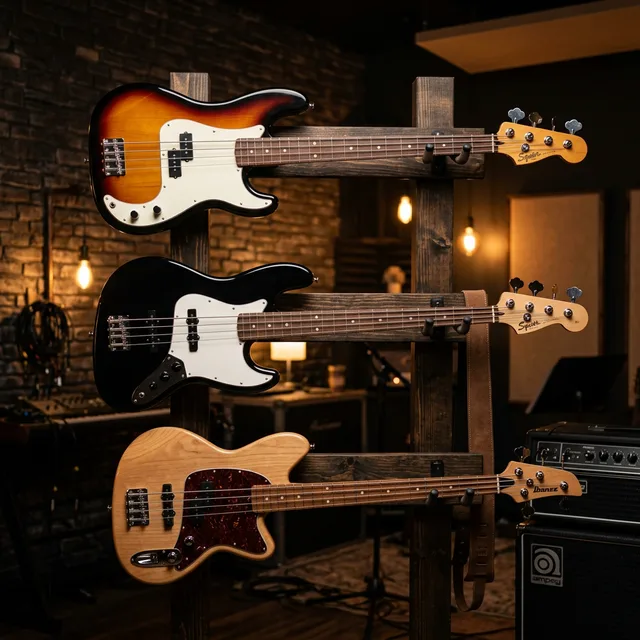
4. Squier Classic Vibe ’60s Precision Bass - Best Vintage Thump
If the Jazz Bass is the scalpel, the Precision Bass is the sledgehammer. The single split-coil humbucker produces a fat, round, midrange-dominant tone that fills the low end of a mix like concrete fills a foundation. There is a reason why 90% of Motown, punk, country, and classic rock records feature a P-Bass: it just works in every musical context without requiring EQ surgery.
The ’60s Precision Bass version of the Classic Vibe line features a slightly slimmer neck than the ’50s version, making it more comfortable for players who find traditional P-Bass necks (nicknamed “baseball bats”) too chunky. Read our beginner bass guitar guide for more context on the Precision vs. Jazz Bass debate.
Best for: Rock, punk, country, Motown, and any genre where the bass should provide a solid foundation without drawing attention to itself.
Squier Classic Vibe ’60s Precision Bass on Amazon
5. Ibanez SR300E - Best Lightweight Modern Bass
Ibanez basses are built for comfort and speed. The SR300E weighs significantly less than a Fender-style bass thanks to the aggressively contoured mahogany body, and the ultra-slim SR4 neck profile lets your fretting hand fly across the fretboard with minimal resistance. The neck-through-body joint (actually a bolt-on, but shaped to feel like a set neck) provides full access to the upper frets without the heel block getting in the way.
The PowerSpan dual-coil pickups with the 3-band active EQ are remarkably versatile. You can dial in scooped modern metal tones, punchy fingerstyle fundamentals, or bright slap tones all from the same onboard controls. The zero-fret design ensures consistent action and intonation that budget instruments normally struggle with.
Best for: Progressive rock, metal, fusion, and any genre requiring fast playing and extended fretboard access. The lightest bass on this list by a significant margin.
6. Fender Player Precision Bass - Best “Almost Pro” Option
At $499 (often found on sale for $450), the Fender Player Precision Bass sits right at our ceiling price but delivers a genuine made-in-Mexico Fender with the real Fender headstock logo, real Fender Alnico V pickup, and a modern “C” neck profile with a satin urethane finish that feels faster than the Classic Vibe’s gloss coat.
This is the bass you buy when you know you are committed to playing and you want an instrument you will never outgrow. The build quality leap from Squier to Fender Player is real: tighter tolerances, better tuning hardware, and pickups wound to Fender’s American-derived specifications.
Best for: Players who want a “real Fender” that holds resale value, gigs reliably for decades, and records with authority. This is an investment instrument.
Fender Player Precision Bass on Amazon
7. Harley Benton JB-75 - Best Under $200
Harley Benton is Thomann’s house brand, and the JB-75 is a Jazz Bass clone that has developed a cult following among budget bass hunters. For around $180 shipped, you get a roasted maple neck (resistant to humidity changes), Alnico V pickups, and a fit and finish that embarrasses instruments costing twice as much.
The catch: you are ordering from Thomann’s European warehouse, so shipping takes 1-2 weeks to the US, and returns require international shipping. The quality control is generally good but not as consistent as Yamaha or Squier, so a professional setup from a local guitar tech ($50-$60) is strongly recommended after purchase.
Best for: Budget-conscious players who want the most bass guitar per dollar spent. Excellent as a modding platform because the hardware is easy to upgrade incrementally.
Harley Benton JB-75 on Thomann
How to Get the Most Out of a Budget Bass
A $400 bass with a $60 professional setup plays better than a $600 bass straight out of the box. Every bass guitar, regardless of price, benefits from having a qualified guitar technician adjust the truss rod relief, saddle height, pickup height, and intonation. This process takes 30-45 minutes and transforms a “good” bass into an instrument that plays effortlessly.
Strings matter more than most beginners realize. The factory strings on budget basses are typically the cheapest rounds the manufacturer can source. Swapping to a set of D’Addario NYXL or Ernie Ball Cobalt Slinky strings ($25-$30) immediately improves clarity, sustain, and tuning stability. For the P-Bass thump, try flatwound strings like the La Bella 760FS, which are the exact strings James Jamerson used to record every Motown hit.
Learn proper technique before blaming the gear. A bassist with clean fretting, controlled plucking dynamics, and proper muting technique will make any bass on this list sound professional. A bassist with sloppy habits will make a $3,000 Custom Shop Fender sound like a toy.
Amplification on a Budget
Your bass needs an amplifier, and no, you cannot use a guitar amp. Bass frequencies will destroy a guitar speaker. Here are the best budget options:
- Fender Rumble 25 ($120): Perfect for bedroom practice. 25 watts through an 8-inch speaker with a headphone jack for silent playing.
- Ampeg Rocket Bass RB-108 ($130): Ampeg tone in a tiny package. The scrambler overdrive circuit adds tube-like grit.
If you plan to record, consider skipping the bass amp entirely and going direct into an audio interface with amp simulation plugins in your DAW. This approach saves money, eliminates noise, and gives you infinite tonal options in the box.
Related Reading

Music Gear Specialist Review Desk
Research-based reviewsResearch-based reviews · Manufacturer specs · Verified owner feedback
We review guitars, amps, pedals, and recording gear the honest way: spec sheets, published measurements, and the collected experience of working musicians and verified owners.