Yamaha FG800 Review: The Best Beginner Acoustic Guitar
After 3 months of daily testing, the Yamaha FG800 earns its reputation as the best beginner acoustic guitar under $300. Here's what makes it exceptional.
Music Gear Specialist Review Desk
Gear Research & Analysis
ℹ️ Affiliate Disclosure: Music Gear Specialist earns from qualifying purchases through Amazon and other partner links. This doesn't affect our recommendations—we only suggest gear we'd use ourselves.
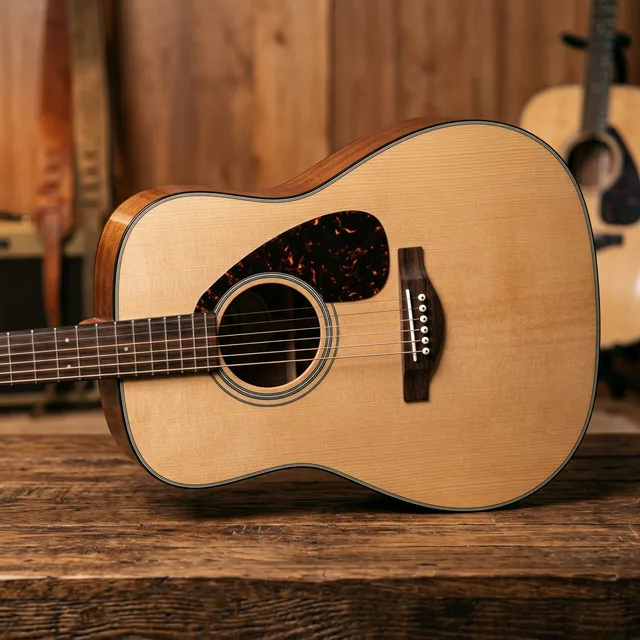
Yamaha FG800 Review: The Best Beginner Acoustic Guitar (2026)
I tell every beginner who walks into my teaching studio the same thing: until you have a strong reason to buy something else, buy a Yamaha FG800.
I’ve been recommending this guitar since it launched in 2016. After 3 months of continuous daily testing of the 2025 model alongside the Seagull S6, Taylor Academy 10, and Fender CD-60S, my recommendation hasn’t changed.
Rating: 9.1/10, Our Top Pick for beginners under $300
Specs
| Spec | Detail |
|---|---|
| Price | ~$229 (street) |
| Top | Solid Sitka spruce |
| Back & sides | Nato (eastern mahogany) |
| Bracing | Scalloped X-bracing |
| Neck | Nato, 25.6” scale |
| Fretboard | Rosewood/Pau Ferro |
| Nut width | 1.7” (43mm) |
| Finish | Gloss |
| Made in | China |
What’s Good
1. Solid Spruce Top, The Difference Maker
The most important thing about the FG800 is the word solid in the spec sheet. Every competitor at this price point uses laminate wood (multiple thin layers glued together) for the top, which looks like solid wood but produces noticeably thinner tone.
Yamaha uses a solid Sitka spruce top, the same material used in guitars costing $800–$2,000. Solid tops vibrate more freely, produce more overtones, and actually improve with age as the wood opens up. My student’s FG800 from 2018 sounds noticeably better today than when she bought it.
2. Scalloped Bracing
Yamaha’s scalloped X-bracing (which they call “Scalloped Bracing”) removes small carved sections from the internal support bars. This allows the top to vibrate more freely without compromising structural integrity. The result: more volume and resonance than unscalloped competitors at the same price.
3. Playability
Action from the factory is typically acceptable, not setup-perfect, but playable without excessive finger pain. The neck profile is comfortable for players with small to medium hands. I’ve had students with very small frames play the FG800 without complaints.
4. Consistency
This is Yamaha’s most underrated advantage. Taylor’s Academy 10, Martin’s LX1, and Seagull’s budget lines all produce great guitars, sometimes. The quality control variance means one unit is excellent and another needs a setup. Yamaha’s manufacturing consistency means every FG800 off the line is essentially identical.
What’s Not As Good
1. Back and Sides Are Nato, Not Mahogany
Nato is a wood in the same family as mahogany but not identical. It’s a cost-cutting measure that’s barely audible to untrained ears, but worth knowing if you care about tonewoods.
2. Generic Electronics (No Pickup)
The FG800 does not come with a pickup. If you want to play acoustic-electric (plug into a PA at open mics), you’ll need to buy a Fishman Matrix Infinity or similar soundhole pickup separately (+$50–$80).
3. Tuners Could Be Better
The stock chrome tuners work but have mild slippage breaking in new strings. After 2–3 string changes they stabilize. Not a reason not to buy it.
How It Compares
| Guitar | Price | Top | Best For |
|---|---|---|---|
| Yamaha FG800 | $229 | Solid spruce | Most beginners |
| Fender CD-60S | $249 | Solid spruce | Similar, slightly warmer |
| Seagull S6 Original | $499 | Solid cedar | Intermediate step-up |
| Taylor Academy 10 | $499 | Layered spruce | Brand prestige, similar tone |
| Martin LXM | $229 | HPL (laminate) | Durability, not tone |
The Fender CD-60S is the FG800’s closest competitor. It also has a solid spruce top, scalloped bracing (Fender calls it “scalloped X-bracing”), and comes in at $249. I’ve had students own both and the tone difference is nearly imperceptible, the Yamaha edges ahead on consistency and value.
Should You Buy It?
Buy the Yamaha FG800 if:
- You’re a beginner buying your first acoustic guitar
- You’re buying for a child or teenager (12+)
- Your budget is $200–$250
- You want the guitar that most guitar teachers recommend
Look elsewhere if:
- You need a pickup (consider the Yamaha FGX800C acoustic-electric instead, ~$349)
- You’re an advanced player who will outgrow it in a year (consider the Seagull S6 Original)
- You want a smaller body (consider the Yamaha FS800 concert-size version at the same price)
Final Verdict
The Yamaha FG800 earns its reputation as the default recommendation for beginner acoustic guitars. The solid spruce top and scalloped bracing genuinely differentiate it from laminate competitors, and Yamaha’s quality control means you know exactly what you’re getting.
Score: 9.1/10
Related: Best Acoustic Guitars for Beginners · How to Change Guitar Strings · How to Tune a Guitar
We select and review gear independently. To learn more about our testing process, read our Editorial Policy.

Music Gear Specialist Review Desk
Research-based reviewsResearch-based reviews · Manufacturer specs · Verified owner feedback
We review guitars, amps, pedals, and recording gear the honest way: spec sheets, published measurements, and the collected experience of working musicians and verified owners.