Best Guitar Amps for Home and Stage (2026)
Modeling amps outsold traditional amps on Reverb in 2025. We tested 9 top picks from $160 to $1,499, the Boss Katana-50 Gen 3 leads our 2026 rankings.
Mike Reynolds
Professional Guitarist & Audio Engineer · 20+ years
ℹ️ Affiliate Disclosure: Music Gear Specialist earns from qualifying purchases through Amazon and other partner links. This doesn't affect our recommendations—we only suggest gear we'd use ourselves.
ℹ️ Affiliate Disclosure: Music Gear Specialist earns from qualifying purchases through Amazon and other partner links. This doesn't affect our recommendations—we only suggest gear we'd use ourselves.
The guitar amp market flipped in 2025. For the first time ever, modeling amplifiers and digital floor units outsold traditional guitar amps on Reverb (Reverb, 2025). The Boss Katana series became the best-selling amplifier line in the industry. And flagship digital modelers got so good that many touring musicians can’t tell the difference from real tube amps in blind tests.
But tube amps aren’t dead, far from it. They still deliver a physical, air-moving experience that digital can’t fully replicate. The real question isn’t “tube or digital?” anymore. It’s “which amp fits how I actually play?”
We researched the top amps across every category using expert reviews from Guitar World, GuitarRank, Tre Audio, and detailed YouTube comparisons. Here are the 9 best guitar amps you can buy in 2026.
TL;DR: The Boss Katana-50 Gen 3 ($300) is the best amp for most players, 50 watts, 60+ effects, and tone that embarrasses amps at twice its price. For tube purists, the Fender Blues Junior IV ($749) remains the gold standard for pedal-platform tone. And if you gig hard, the Line 6 Catalyst 200 ($499) offers staggering power and versatility at a price that makes no sense.
Quick Comparison: Our Top 9 Picks
| Rank | Model | Price | Watts | Type | Best For | Rating |
|---|---|---|---|---|---|---|
| 🥇 | Boss Katana-50 Gen 3 | $300 | 50W | Modeling | Best overall | 9.5/10 |
| 🥈 | Fender Blues Junior IV | $749 | 15W | Tube | Best tube amp under $1K | 9.4/10 |
| 🥉 | Line 6 Catalyst 200 | $499 | 200W | Modeling | Best gigging value | 9.3/10 |
| 4 | Fender ‘65 Deluxe Reverb | $1,499 | 22W | Tube | Best recording amp | 9.6/10 |
| 5 | Vox AC15C1 Custom | $999 | 15W | Tube | Best vintage British tone | 9.3/10 |
| 6 | Fender Tone Master Twin | $1,149 | 200W | Modeling | Best tube-killer | 9.4/10 |
| 7 | Orange Super Crush 100 | $579 | 100W | Solid-state | Best clean platform | 9.1/10 |
| 8 | Fender Mustang LT25 | $160 | 25W | Modeling | Best for beginners | 8.8/10 |
| 9 | Marshall DSL1CR | $284 | 1W | Tube | Best bedroom tube | 8.9/10 |
Best Overall: Boss Katana-50 Gen 3 ($300)
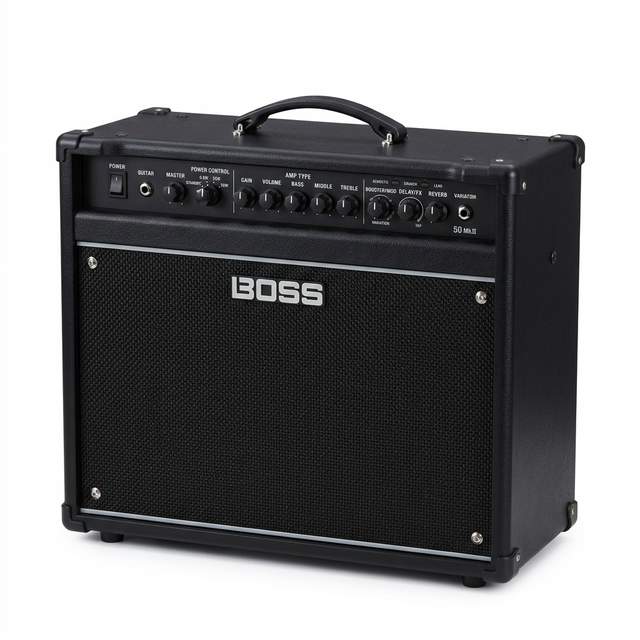
The Boss Katana didn’t become the best-selling amp line in the industry by accident. The Gen 3 update adds a new “Pushed” amp mode for edge-of-breakup tones, refines the Tube Logic engine that made the original famous, and packs over 60 built-in effects, all for $300.
Why it wins: The Katana-50 Gen 3 does everything well. Its cleans are clear and bell-like. Its high-gain tones are tight and articulate enough for serious metal. The power attenuator scales output from 50 watts down to 0.5 watts for apartment-volume playing. And the Boss Tone Studio app lets you customize every parameter, load additional effects, and save presets.
Highlights:
- 50 watts through a 12” custom speaker
- Tube Logic technology for authentic tube-amp feel
- New “Pushed” amp mode in Gen 3 for crunch tones
- 60+ built-in Boss effects (delay, reverb, modulation, drive)
- Power attenuator: 50W / 25W / 0.5W settings
- Headphone out and USB recording interface
Who it’s for: Everyone. Seriously, beginners exploring tone, gigging musicians who need a reliable backup, bedroom players who want great sound at low volume, and recording guitarists who need USB direct-in capability.
Potential downside: Deep tone editing requires the Boss Tone Studio desktop app. The onboard controls are more limited than the software. Some tube purists find the high-gain tones a touch “digital” compared to a real recto.
Best Tube Amp Under $1K: Fender Blues Junior IV ($749)
Boss
Boss Katana-50 Gen 3
$299.99
Sound Profile:
"High-fidelity digital modelling of classic and modern tones."
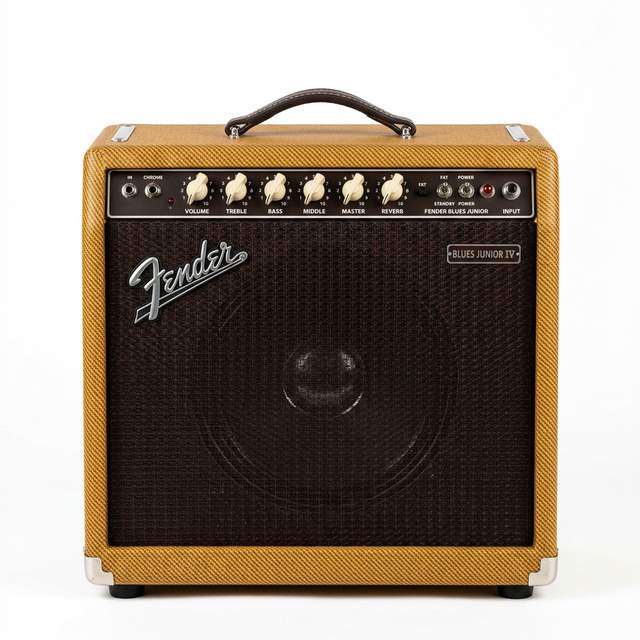
The Blues Junior is one of the most recorded amplifiers in history, and the IV continues that legacy. Fifteen watts of all-tube power through a Celestion A-Type speaker delivers that famous Fender clean tone that breaks up beautifully when pushed with pedals or volume.
Why it’s a classic: The Blues Junior IV isn’t trying to be everything. It does one thing spectacularly: clean-to-edge-of-breakup tone that responds to every nuance of your pick attack. The op-amp-driven spring reverb is lush without being washy. And the “Fat” switch adds low-end thickness that makes single-coil guitars sound massive.
Highlights:
- 15W all-tube (EL84 power tubes)
- 1x12” Celestion A-Type speaker
- Op-amp-driven spring reverb
- “Fat” switch for thickened tone
- Two channels with simple 3-band EQ
- Lightweight and portable for its class
Who it’s for: Blues, jazz, and classic rock players who want an authentic tube combo that doubles as a world-class pedal platform. Studio musicians who need organic breakup at manageable volumes.
Potential downside: 15 tube watts is LOUD, it’ll keep up with a drummer easily, but you can’t get that sweet spot breakup at bedroom volumes without a separate attenuator. No effects loop.
Our take: If you play mostly clean-to-crunch styles and use 2-3 pedals, the Blues Junior IV is the last amp you’ll ever need. We’ve seen players try $2,000+ boutique amps and come back to the Blues Junior because nothing else responds to pedals quite the same way. It’s not the quietest, flashiest, or most feature-packed, it’s just the one that sounds right.
Best Gigging Value: Line 6 Catalyst 200 ($499)
Two hundred watts. 2x12” speakers. Line 6’s HX-quality effects. $499. Yes, seriously. The Catalyst 200 is the most absurd value proposition in the amp market right now, a gig-ready powerhouse that costs less than some practice amps.
Highlights:
- 200 watts through 2x12” custom-design speakers
- 6 original amp models (not copies, designed from scratch)
- High-quality HX series effects built in
- Power attenuator for volume scaling
- MIDI control for complex rig setups
Who it’s for: Gigging musicians who need pure, reliable volume on a budget. Cover band players who need tonal variety night after night. Anyone who’s ever thought “I need more power but can’t afford it.”
Potential downside: At 200W into 2x12”, it’s not exactly a bedroom amp. The original amp models take some adjustment if you’re used to traditional Fender/Marshall voicings.
Best Recording Amp: Fender ‘65 Deluxe Reverb ($1,499)
The Fender ‘65 Deluxe Reverb is the amp that studio engineers reach for when they need “the guitar sound.” Twenty-two watts of 6V6 tube power through a Jensen C12K speaker delivers cleans that shimmer, breakup that sings, and a tube-driven spring reverb that’s become the benchmark all other reverbs are measured against.
Highlights:
- 22W all-tube (6V6 power tubes)
- 1x12” Jensen C12K speaker
- Tube-driven spring reverb, the gold standard
- Classic tube-driven tremolo
- Two channels: Normal and Vibrato
Who it’s for: Serious studio musicians, professional recording engineers, and tone chasers who want the amp that defined the “American clean sound.” This is the ultimate pedal platform, throw any pedal in front of it and it’ll make that pedal sound better.
Potential downside: At $1,499, it’s a serious investment. It’s also heavy (42 lbs) and has zero built-in modern features, no headphone jack, no USB, no effects loop. This amp is for players who know exactly what they want.
Best Vintage British Tone: Vox AC15C1 Custom ($999)
If the Fender Deluxe Reverb is the sound of America, the Vox AC15 is the sound of Britain. Its EL84-driven “chime” and natural compression defined the British Invasion and continue to inspire indie, alternative, and classic rock players. The Celestion Greenback speaker adds a warm, focused midrange push.
Highlights:
- 15W all-tube with EL84s
- 1x12” Celestion G12M Greenback speaker
- Normal and Top Boost channels
- Built-in tremolo and spring reverb
- Iconic diamond-patterned grille cloth
Who it’s for: Players chasing that Beatles, Radiohead, or Arctic Monkeys tone. Indie and alternative guitarists who want rich, harmonically complex overdrive that cleans up beautifully with the guitar’s volume knob.
Best Tube-Killer: Fender Tone Master Twin Reverb ($1,149)
The Tone Master series is Fender’s admission that digital has caught up to tubes, and they’re the ones who built it. This amp digitally models Fender’s legendary Twin Reverb circuit so accurately that many players and engineers can’t tell the difference in blind listening tests. But it weighs 33 lbs instead of 64, and the 5-way power attenuator lets you scale from 200W down to whisper-quiet levels.
Highlights:
- Digital modeling of the Twin Reverb circuit
- 2x12” Jensen N12K speakers
- Balanced XLR output with cabinet simulation
- 5-way power attenuator (200W down to ~1W equivalent)
- 33 lbs vs 64 lbs for the real Twin, your back will thank you
- Onboard digital spring reverb and tremolo
Who it’s for: Touring musicians who need massive Twin Reverb headroom and cleans but hate loading 64 pounds in and out of vans. Studio players who want a balanced XLR direct out with cab sim.
Gigging and Practice Picks
Orange Super Crush 100, $579 (Best Clean Platform)
Fender
Fender Blues Junior IV
$749.99
Sound Profile:
"Warm, chiming cleans with a musical overdrive when pushed."
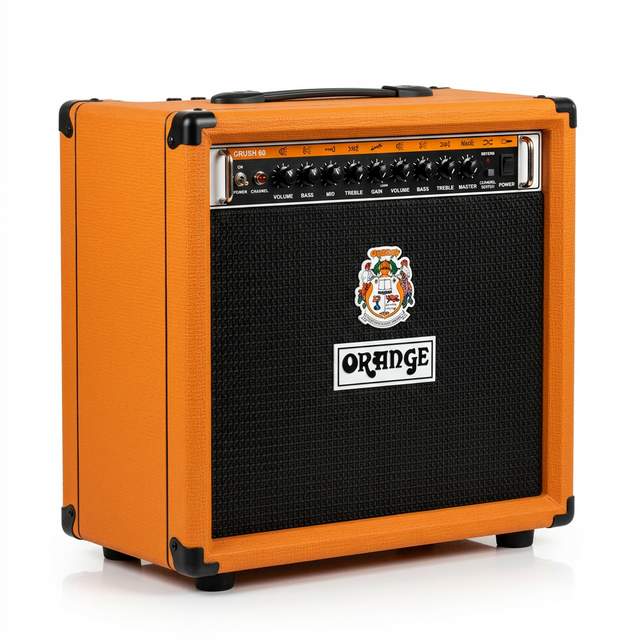
Orange built the Super Crush 100 with a JFET preamp design that mimics tube-like response without any actual tubes. The result is 100 watts of dense, thick tone with massive headroom. If you run a pedalboard and just need a loud, clean amp to push your signal through, this is your answer.
Fender Mustang LT25, $160 (Best for Beginners)
At $160, the Mustang LT25 gives beginners 20 amp models, 25 effects, and 30 presets through a simple interface. USB out for recording and a headphone jack for silent practice make it the complete starter package. It won’t win tone wars with the Katana, but it costs half as much and covers all the basics.
Marshall DSL1CR, $284 (Best Bedroom Tube Amp)
Orange
Orange Crush Pro CR60C
$629.00
Sound Profile:
"Warm, thick mids with the signature Orange "fuzzy" gain."
If you absolutely must have real Marshall crunch at home volumes, the DSL1CR delivers it. One watt (switchable to 0.1W!) through an 8” Celestion speaker gives you authentic tube saturation, two channels of it, without eviction notices.
Our experience: We run the DSL1CR at 0.1W after 10 PM and it’s genuinely usable at TV volume. The two-channel design means you get a clean channel that’s decent (not amazing) and an ultra-gain channel that has real Marshall character. For $284, it’s the cheapest way to feel what a cranked tube amp actually does to your playing, that responsive, touch-sensitive compression changes how you approach the guitar.
Tube vs. Modeling vs. Solid-State: Which Type Do You Need?
Here’s the honest breakdown:
| Factor | Tube | Modeling | Solid-State |
|---|---|---|---|
| Tone quality | Rich, warm, harmonically complex | Excellent, indistinguishable at flagship level | Clean and clear; overdrive less convincing |
| Feel (touch response) | Best, responds to every pick nuance | Very good in 2026 | Consistent but less dynamic |
| Volume flexibility | Loud, needs attenuator for home use | Excellent, sounds great at any volume | Good at all volumes |
| Maintenance | Tubes wear out, need replacement | Zero | Zero |
| Weight | Heavy | Light | Moderate |
| Built-in effects | Usually none | 30-100+ effects included | Varies |
| Price for great tone | $749+ | $300+ (Katana) | $500+ |
| Recording | Needs a mic and good room | USB direct, studio quality instantly | Varies |
Wattage Guide: How Loud Do You Actually Need?
Here’s what matters: a 15-watt tube amp sounds roughly as loud as a 50-watt solid-state amp because tubes compress differently. Don’t compare watt numbers across amp types.
| Use Case | Solid-State / Modeling | Tube |
|---|---|---|
| Bedroom / apartment | Under 20W with headphone jack | 1W (seriously, even 5W is loud) |
| Band rehearsal | 50-100W | 15-30W |
| Small gigs (150 people) | 50-100W | 15W is fine |
| Large venues / outdoor | 100-200W | 30-50+W |
| Recording | Any wattage, USB direct | 15-22W (sweet spot for micing) |
Keep Reading
- Best Electric Guitars for Every Budget (2026), pair your amp with the right guitar
- Best Multi Effects Pedals (2026), add effects without a pedalboard
- Getting Started with Home Recording, record your amp at home
- Guitar Pedals Explained, build your pedalboard
The Bottom Line
The 2026 amp market comes down to three honest recommendations:
If you want the best value: The Boss Katana-50 Gen 3 at $300 does 90% of what amps costing $1,000+ can do. It’s the most versatile amp ever made at this price.
If you want real tube tone: The Fender Blues Junior IV at $749 is the most musical, pedal-friendly tube combo under a thousand dollars. Nothing responds to your playing like a cranked tube amp.
If you need gig power on a budget: The Line 6 Catalyst 200 at $499 gives you 200 watts with premium effects for less than some 15-watt amps. It makes zero financial sense, in the best possible way.
Pick the amp that matches how you actually play, not how you hope to play someday. A bedroom player doesn’t need 200 watts. A gigging musician doesn’t need a 1-watt tube amp. Buy for your reality, upgrade later when your reality changes.

Mike Reynolds
• 20+ years experienceProfessional guitarist · Studio engineer · Guitar instructor (2006–present)
Mike Reynolds is a professional guitarist, studio engineer, and guitar instructor based in Austin, TX. He has recorded with regional acts across rock, blues, and country, and has been teaching private guitar lessons since 2006. Mike built his first home studio in 2008 and has since helped hundreds of students find the right gear for their budget and goals.