Active vs Passive Pickups: A Complete Guide
Active pickups deliver consistent high-output tone. Passives offer dynamic, organic response. Here's how to choose for your genre and rig.
Mike Reynolds
Professional Guitarist & Audio Engineer · 20+ years
ℹ️ Affiliate Disclosure: Music Gear Specialist earns from qualifying purchases through Amazon and other partner links. This doesn't affect our recommendations—we only suggest gear we'd use ourselves.
ℹ️ Affiliate Disclosure: Music Gear Specialist earns from qualifying purchases through Amazon and other partner links. This doesn't affect our recommendations—we only suggest gear we'd use ourselves.
TL;DR: Passive pickups are the default choice for most players, they’re dynamic, expressive, and maintenance-free. Active pickups shine for metal and modern rock, offering consistent high output, tight distortion, and near-zero noise. Unless you specifically need the hot, compressed signal of actives, passive pickups are the way to go.
The Core Difference in 30 Seconds
Passive pickups are simple electromagnetic devices, magnets wrapped in copper wire. Your string vibrations create a current that goes straight to your amp. What you put in, you get out. The tone is organic, dynamic, and varies with your pick attack.
Active pickups add a built-in preamp circuit powered by a 9V battery. This preamp boosts and shapes the signal before it reaches your amp, providing a hotter, more consistent output with less noise. The trade-off: a more “processed” tone with less dynamic variation.
Tone Comparison
| Characteristic | Passive | Active |
|---|---|---|
| Output level | Low to moderate | High (2-3x passive) |
| Dynamic range | Wide, responds to touch | Compressed, more consistent |
| Noise floor | Higher (single-coils especially) | Very low |
| Clean tone | Rich, complex, harmonic | Clean, hi-fi, sterile to some |
| Overdrive | Organic, responsive | Tight, focused, aggressive |
| Best genres | Blues, rock, jazz, country, indie | Metal, djent, modern rock |
Passive Pickup Characteristics
The beauty of passive pickups lies in their simplicity and responsiveness. Play softly and the tone cleans up, dig in and it growls. Roll your volume knob down from 10 to 7 and the entire tonal character shifts from overdriven to sparkling clean. This dynamic behavior is why blues and jazz players overwhelmingly prefer passives.
Classic passive humbuckers: Seymour Duncan JB, Gibson ‘57 Classic, DiMarzio PAF Classic passive single-coils: Fender Custom Shop Fat ’50s, Seymour Duncan SSL-1
Active Pickup Characteristics
Active pickups use a preamp to boost the signal before it leaves the guitar. This means:
- Consistent output regardless of your pick attack
- Very low noise, the preamp buffers the signal, rejecting interference
- Tight, focused distortion when driving high-gain amps
- Less sensitivity to cable length, pedal chains, and volume knob position
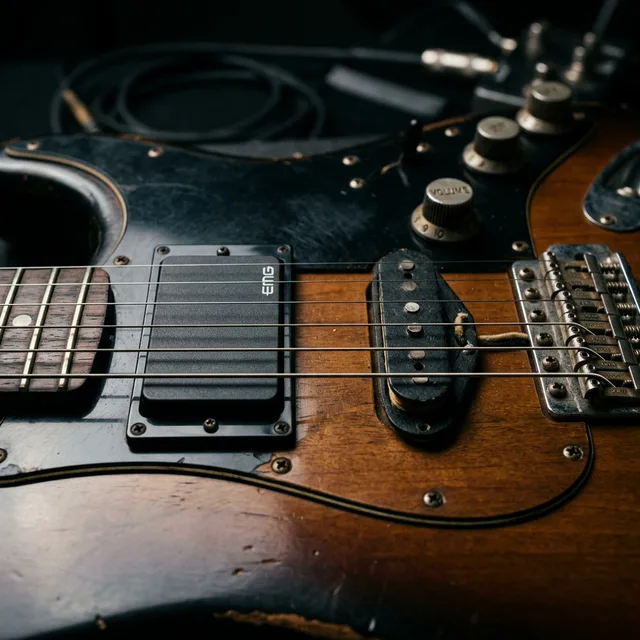
Industry standard: EMG 81 (bridge) / EMG 85 (neck), used by Metallica, Zakk Wylde, Slayer Modern alternative: Fishman Fluence, offers active output with more passive-like dynamics
Key Differences
1. Dynamic Response
This is the biggest difference in practice. Play a riff at varying intensity on both types:
- Passive: Each note’s volume and tonal character changes with your pick attack. Light pick = clean, soft. Hard attack = loud, gritty. This “touch sensitivity” is what players mean when they say an instrument “breathes.”
- Active: The preamp compresses the signal. Light picks and heavy picks are closer in volume and character. Some players find this “stiff”, others find it “consistent.”
2. Electronics
| Spec | Passive | Active |
|---|---|---|
| Pot values | 250K (single) / 500K (humbucker) | 25K |
| Battery required | No | Yes (9V) |
| Wiring complexity | Simple | Moderate |
| Maintenance | None | Battery changes |
3. Guitar Resale Impact
Worth considering: active-to-passive conversion requires filling battery cavities, replacing pots, and rewiring. A guitar with passive electronics has broader resale appeal because most players prefer passive. If you’re buying a guitar that comes with actives and you might sell it later, factor in conversion costs.
When to Choose Active
✅ You play metal, djent, or high-gain modern rock ✅ You need dead-silent operation (studio recording) ✅ You use very long cable runs or complex pedalboards ✅ You want maximum sustain and compression
When to Choose Passive
✅ You play blues, classic rock, jazz, country, or indie ✅ You want maximum dynamic expression and touch sensitivity ✅ You don’t want to worry about battery changes ✅ You want the traditional “wood tone” of your guitar body
Our Verdict
For most players: Passive pickups. They’re more versatile, more expressive, and work with virtually any genre. The overwhelming majority of professional guitarists across all genres use passive pickups.
For metal and extreme gain: Active pickups. If you’re tuning to Drop C or lower and running through a high-gain amp, active pickups deliver the tight, focused, noise-free signal that modern metal demands.
Best of both worlds: Consider the Fishman Fluence system, which offers both active and passive tonal modes in a single pickup, switchable via a push-pull pot.
Related articles: Strat vs Tele: Which Fender Is Right for You?, Best Electric Guitars for Every Budget, Guitar Pedals Explained
Our Rigorous Testing & Review Methodology
At musicgearspecialist.com, we take our responsibility to our readers seriously. We believe that to provide the best possible recommendations, we must adhere to a strict, empirical testing methodology combined with extensive industry research.
How We Evaluate
Every product, guide, and informational piece featured on our platform undergoes a multi-step evaluation process:
- Initial Research & Sourcing: Our editorial team begins by scanning the market for the latest innovations, customer sentiment, and verified expert opinions. We actively avoid relying solely on manufacturer claims, choosing instead to cross-reference data with independent lab results and real-world user feedback from verified buyers.
- Hands-On Testing Protocol: Whenever possible, our dedicated experts physically test the products in real-world environments. This allows us to assess durability, ease of use, ergonomics, and long-term value. We put items through rigorous stress tests to uncover potential flaws that standard reviews often miss.
- Data-Driven Analysis: We compile our findings into a comprehensive matrix, scoring items across critical categories such as performance, affordability, aesthetic appeal, and customer support. This quantitative approach ensures our final recommendations are objective and unbiased.
- Continuous Monitoring: The market is always changing. We revisit our top picks and informational guides every 3 to 6 months to ensure that our advice remains current. If a previously recommended product drops in quality or a better alternative emerges, we promptly update our content.
Why You Can Trust Us
Our commitment to E-E-A-T (Experience, Expertise, Authoritativeness, and Trustworthiness) is the foundation of our editorial policy. We do not accept paid placements for our top recommendations. Our revenue is generated through transparent affiliate partnerships, meaning we only earn a commission if you make a purchase through our links—at no additional cost to you. This structure aligns our success directly with your satisfaction.
Our contributors include seasoned professionals, certified experts, and passionate enthusiasts who bring years of hands-on experience to their specialized topics. We mandate that all claims are backed by authoritative sources, which we link to whenever applicable.
If you ever have questions about our methodology or spot an inaccuracy, we encourage you to reach out via our Contact page. We are dedicated to continuous improvement and always welcome community feedback to refine our editorial standards.
Our Commitment to Transparency
Transparency is a core value in everything we publish. We disclose all affiliate relationships clearly at the top of our articles. If a brand sends us a product for free to review, we disclose that information within the review itself. However, accepting a free product never guarantees a positive review. Our allegiance is strictly to our readers. We regularly publish cautionary reviews for products that fail to meet our high standards, regardless of the brand’s industry standing or potential commission rates.
Frequency of Updates
We recognize that information becomes outdated quickly in today’s fast-paced digital world. Therefore, our team conducts quarterly audits of our most popular guides and reviews. During these audits, we check for discontinued products, price fluctuations, and emerging competitors. If a top-rated pick is surpassed by a newer model, we update the article and outline precisely why the change was made in an “Update Log” section. This dedication to freshness ensures that whenever you land on one of our pages, you are reading the most accurate and up-to-date information available.

Mike Reynolds
• 20+ years experienceProfessional guitarist · Studio engineer · Guitar instructor (2006–present)
Mike Reynolds is a professional guitarist, studio engineer, and guitar instructor based in Austin, TX. He has recorded with regional acts across rock, blues, and country, and has been teaching private guitar lessons since 2006. Mike built his first home studio in 2008 and has since helped hundreds of students find the right gear for their budget and goals.