Tube vs Solid State Amps: A Complete Guide
Tube amps outsell solid-state 3:1 among pros, but solid-state wins on reliability and price. We compare tone, weight, cost, and maintenance.
Mike Reynolds
Professional Guitarist & Audio Engineer · 20+ years
ℹ️ Affiliate Disclosure: Music Gear Specialist earns from qualifying purchases through Amazon and other partner links. This doesn't affect our recommendations—we only suggest gear we'd use ourselves.
ℹ️ Affiliate Disclosure: Music Gear Specialist earns from qualifying purchases through Amazon and other partner links. This doesn't affect our recommendations—we only suggest gear we'd use ourselves.
TL;DR: Tube amps deliver the warmth, dynamics, and “feel” that define classic rock, blues, and jazz tones, but they’re heavy, expensive, and require maintenance. Solid-state amps (including modern modeling amps) offer reliability, consistency at low volumes, and incredible value, and in 2026, the best ones rival tubes in tone. For most home players, a solid-state modeling amp like the Boss Katana-50 ($300) is the smarter buy.
Why This Debate Still Matters in 2026
Modeling amps outsold traditional amps on Reverb in 2025, for the first time ever. That tells you something about where the market is heading. But walk into any guitar shop, and the tube section still draws a crowd. The romance of glowing glass and warm harmonic compression isn’t going anywhere.
The truth is, both technologies have gotten remarkably good at what they do. The question isn’t “which is better?”, it’s “which is better for you?”
How They Work (The 30-Second Version)
Tube amps amplify your guitar signal using vacuum tubes, glass bottles that glow orange and heat up to 700°F. When pushed hard, tubes compress the signal gradually (“soft clipping”), adding warm, even-order harmonics that sound musical and organic. This natural compression is the “breakup” that defines classic overdrive.
Solid-state amps use transistors, tiny semiconductor chips. The signal path is entirely electronic, with no moving parts or degrading components. When pushed past their clean range, transistors clip abruptly (“hard clipping”), which can sound harsh, though modern circuit designs and digital modeling have largely solved this.
Tone Comparison
| Characteristic | Tube Amp | Solid State / Modeling |
|---|---|---|
| Clean tone | Warm, harmonically rich, “3D” | Pristine, crystal-clear, consistent |
| Overdrive | Musical, dynamic, responsive | Can be harsh (analog) or convincing (digital) |
| At low volumes | Loses character, tubes need volume to breathe | Full tone at bedroom volume |
| Dynamic response | Highly touch-sensitive, clean up with volume knob | Consistent regardless of attack |
| Best for | Blues, classic rock, jazz, indie | Metal, country (cleans), home practice |
The “Feel” Factor
This is the hardest thing to explain to someone who hasn’t experienced it, and the reason tube amp enthusiasts are so passionate. A great tube amp doesn’t just sound different; it responds differently. Play softly and it cleans up. Dig in and it growls. Roll your guitar’s volume knob down from 10 to 7 and the amp transitions smoothly from overdriven to sparkling clean. It feels like the amp is breathing with you.
Solid-state amps, even great ones, tend to be more binary, clean or dirty, with less variation in between. The best modern modeling amps (Kemper, Neural DSP, Helix) are closing this gap, but most players under $500 will notice the difference.
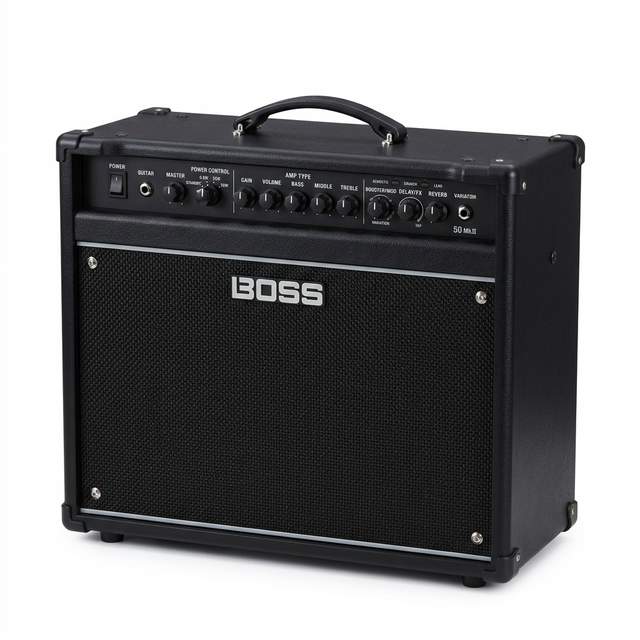
Boss
Boss Katana-50 Gen 3
$299.99
Sound Profile:
"High-fidelity digital modelling of classic and modern tones."
Maintenance & Reliability
This is where solid-state amps decisively win.
Tube amp maintenance:
- Power tubes: Replace every 1-2 years ($50-$150/set)
- Biasing: Required after tube swaps ($30-$60 at a tech)
- Preamp tubes: Replace every 2-4 years ($15-$30 each)
- Capacitors: May dry out after 10-20 years ($200-$500 service)
- Heat: Tubes run extremely hot, requiring cool-down before transport
- Fragility: Glass tubes can break during transport
Solid-state amp maintenance:
- Essentially nothing. Wipe it down occasionally.
- Many solid-state amps from the 1970s are still working perfectly today.
Real cost example: A Fender Blues Junior IV ($700) needs approximately $150-$250 in tube replacements and biasing every 2 years. Over 10 years, that’s $750-$1,250 in maintenance, more than the amp’s purchase price. A Boss Katana-50 ($300) costs $0 in maintenance over the same period.
Weight & Portability
Tube amps are heavy. The output transformer alone can weigh 5-10 pounds. A typical 1x12 tube combo weighs 40-60 lbs. A 4x12 cab? 80+ lbs.
Solid-state amps are light. No transformer, no tubes, no excessive heat to manage. The Boss Katana-50 weighs 25 lbs. Some modeling units (Helix, Kemper) are under 15 lbs.
For gigging musicians loading gear in and out of venues, this matters enormously.
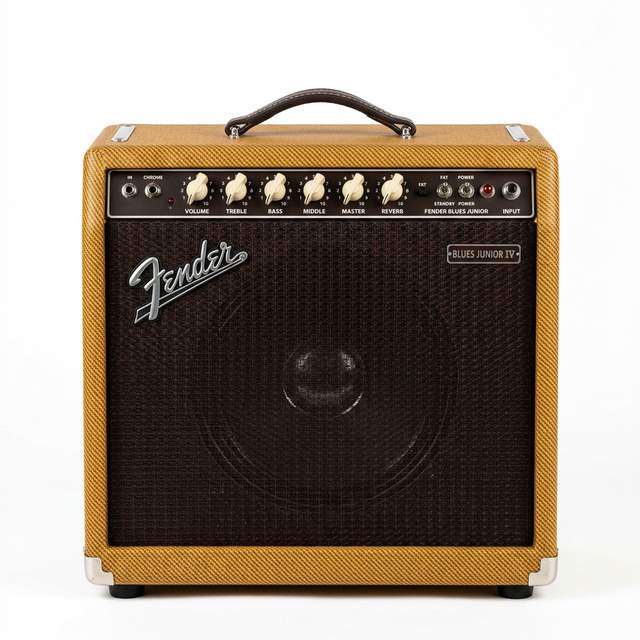
Fender
Fender Blues Junior IV
$749.99
Sound Profile:
"Warm, chiming cleans with a musical overdrive when pushed."
Price Comparison
| Price Range | Tube Amps | Solid State / Modeling |
|---|---|---|
| Under $300 | Nothing worthwhile | Boss Katana-50, Orange Crush |
| $300-$600 | Fender Blues Junior IV ($700) | Line 6 POD Go ($450) |
| $600-$1,000 | Marshall DSL40CR ($900) | Boss GT-1000CORE ($700) |
| $1,000-$2,000 | Fender ‘65 Deluxe Reverb ($1,500) | Neural DSP Quad Cortex ($1,800) |
| $2,000+ | Vintage amps, boutique builders | Kemper Profiler ($2,000) |
The Modern Compromise: Modeling Amps
Here’s the reality of 2026: modeling amps have gotten ridiculously good. The Boss Katana line, Line 6 Helix family, and Neural DSP Quad Cortex can fool professional engineers in blind tests. Many touring professionals now use modeling for touring reliability and fly-date convenience, while keeping a tube amp in the studio for recording.
If you’re a home player or a gigging musician on a budget, a modeling amp is the practical choice in 2026. You get convincing tube tones, built-in effects, headphone output for silent practice, and USB recording, all for less than the cost of a tube amp alone.
Our Verdict
Choose a tube amp if:
- Tone and feel are your absolute top priorities
- You primarily play blues, classic rock, or jazz
- You have the budget for maintenance ($100-$200/year)
- You don’t mind the weight for gigs
- You want the “real thing” and won’t settle for emulation
Choose solid-state / modeling if:
- You need reliability and low maintenance
- You primarily practice at home (low volume)
- You want built-in effects and recording capability
- Budget is a factor
- You need a lightweight amp for gigging
Our recommendation: For most players in 2026, the Boss Katana-50 Gen 3 ($300) offers the best all-around value. It covers 90% of what a tube amp does at a fraction of the cost and weight. If you specifically want tube warmth and can afford it, the Fender Blues Junior IV ($700) is the best entry point into the tube world.
Related articles: Best Guitar Amps for Home and Stage, Best Multi Effects Pedals, Guitar Pedals Explained
See also: Best Guitar Amps, Guitar Pedals Explained, How to Set Up Your Guitar

Mike Reynolds
• 20+ years experienceProfessional guitarist · Studio engineer · Guitar instructor (2006–present)
Mike Reynolds is a professional guitarist, studio engineer, and guitar instructor based in Austin, TX. He has recorded with regional acts across rock, blues, and country, and has been teaching private guitar lessons since 2006. Mike built his first home studio in 2008 and has since helped hundreds of students find the right gear for their budget and goals.