Solid State Amps vs Tube Amps: What to Buy in 2026
Solid state amps vs tube amps explained for 2026: tone, volume, maintenance, recording, gigging, valve terminology, and what to buy.
Music Gear Specialist Review Desk
Gear Research & Analysis
ℹ️ Affiliate Disclosure: Music Gear Specialist earns from qualifying purchases through Amazon and other partner links. This doesn't affect our recommendations—we only suggest gear we'd use ourselves.
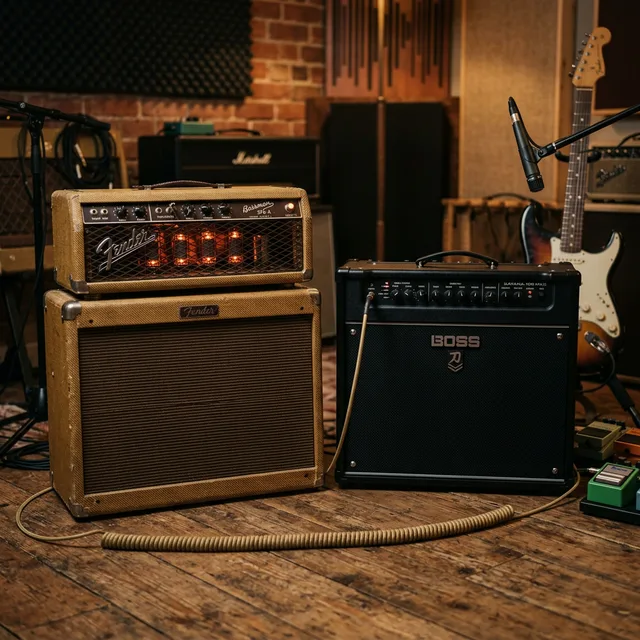
The solid state amps vs tube amps question has a different answer in 2026 than it did twenty years ago. Tube amps still have the feel and compression that made classic records, but modern solid state and modeling amps have solved most of the old tone problems while staying lighter, cheaper, quieter, and easier to record.
The practical answer: most home players, beginners, and cover-band guitarists should buy a modern solid state modeling amp first. Most players who already know they want one specific live sound, play loud enough for the amp to breathe, and accept maintenance costs can still justify a tube amp.
Solid state amps vs tube amps is a buying decision between transistor or digital-modeling amplification and vacuum-tube amplification. Choose solid state if you need low-volume tone, headphone practice, USB/direct recording, presets, and low maintenance. Choose a tube amp if you can play at real volume and want one touch-sensitive live sound enough to accept weight and service costs.
This guide is the buying decision page. For a narrower tone-only debate, see our related tube amp vs solid state listening comparison and the technical tube vs solid state amps explainer.
If your question is specifically valve amp vs tube amp terminology, the short answer is that they are the same technology; the wording depends mostly on region.
Valve Amp vs Tube Amp: Is There a Difference?
No. A valve amp and a tube amp are the same thing. Guitarists in the UK, Australia, and other Commonwealth markets usually say valve amp because the glass components are called valves. Guitarists in the United States usually say tube amp because the same components are called vacuum tubes.
That means valve amp vs tube amp is not a tone comparison. There is no circuit, volume, maintenance, or feel difference created by the wording alone. The useful comparison is valve or tube amp vs solid state or modeling amp, which is what the rest of this guide covers.
Solid State Amps vs Tube Amps: Quick Decision
| Situation | Better choice | Why |
|---|---|---|
| First electric guitar amp | Solid state/modeling | More tones, effects, headphone practice, lower cost |
| Apartment or bedroom practice | Solid state/modeling | Good tones at low volume without power-tube saturation |
| Blues or classic rock gigs | Tube amp | Natural compression and touch response at stage volume |
| Cover band with many genres | Solid state/modeling | Presets, effects, and amp voices in one box |
| Recording direct at home | Solid state/modeling | USB/direct outputs and consistent tones without microphones |
| Simple pedal platform | Either | Tube feels traditional; solid state can be cleaner and lighter |
| Lowest long-term cost | Solid state/modeling | No routine tube replacement or biasing |
| One inspiring sound | Tube amp | A good tube amp can do one core voice extremely well |
What a Tube Amp Does Better
A tube amplifier uses vacuum tubes to amplify your guitar signal. When those tubes are pushed, they compress and distort gradually. That soft clipping is why players describe tube amps as warm, touch-sensitive, and responsive.
The biggest tube advantage is feel. If you play a 15-watt or 30-watt tube amp loud enough for the power section to work, the amp reacts to pick attack in a satisfying way. Pick lightly and it cleans up. Dig in and it compresses, blooms, and adds harmonic texture. That response is real, and players who rely on volume-knob cleanup or dynamic blues phrasing often notice it.
Tube amps also make sense when you want one sound that is already the point. A Vox AC15 for chime, a Fender-style clean platform, or a Marshall-style crunch amp can be more inspiring than scrolling through models and presets. VOX lists the current AC15 Custom as a tube combo with EL84 power tubes and 12AX7 preamp tubes, which is the kind of simple analog platform players mean when they talk about tube feel.
The downside is that tube amps are not magic at low volume. A tube amp idling at bedroom level may sound thinner and less exciting than a good modeling amp. If you cannot turn the amp up, you may be paying for the part of the circuit you rarely get to hear.
Vox AC15C1 Tube Amp
What a Solid State Amp Does Better
Solid state amps use transistors, integrated circuits, or digital modeling instead of vacuum tubes. Old cheap transistor amps earned a bad reputation because their distortion could sound buzzy and brittle. Modern solid state is a different category.
The best current solid state amps are usually modeling amps. They create the amp tone before the power section, which means the sound stays usable at whisper volume, rehearsal volume, or direct-recording level. BOSS lists the Katana-50 Gen 3 as a 50-watt 1x12 combo with power control, USB-C recording, headphone output, and onboard effects, which shows why this category is so practical for normal players.
Solid state also wins on convenience. A single amp can cover clean Fender-style sounds, British crunch, high gain, effects, headphone practice, USB recording, and preset switching. For a beginner, that variety teaches you what you like before you spend serious money on one specialized amp. Line 6 takes the same broad-use approach with the Catalyst family, while Yamaha’s THR-II line leans into desktop practice with Bluetooth support, USB recording, and multiple guitar amp models.
Maintenance is the other major advantage. No tubes to replace, no biasing, no fragile glass, and no panic when the amp rides in a hot car after rehearsal. A reliable solid state amp is not as romantic, but it is easier to own.
Boss Katana 50 MkII
The Bedroom Volume Problem
This is where many tube-amp purchases go wrong. A tube amp often sounds best when the power section is pushed. That can be louder than a bedroom, apartment, dorm, or shared house can tolerate.
Master volume controls, attenuators, and power scaling help. They do not always recreate the same speaker movement, room interaction, and output-stage feel of a loud amp. If the amp spends its life at volume 1, the advantage shrinks.
A solid state modeling amp does not need the speaker to be loud before the tone works. The gain, compression, cabinet simulation, and effects happen before the final output volume. That means a home-practice amp can feel more complete at low level than a tube combo that is barely awake.
For quiet practice, solid state is the default recommendation.
Recording: Mic’d Cabinet vs Direct Workflow
Tube amps still make sense in a studio where you can mic a cabinet, turn up the amp, and choose the room. A good tube combo through a microphone can sound excellent, and the process is simple: guitar, amp, microphone, interface.
Home recording is different. Most players need repeatable tones at low volume. Solid state and modeling amps usually win there because they can record direct over USB or line output, often with speaker simulation already built in. That avoids room noise, microphone placement, and volume complaints.
If you are recording guitar into a DAW, pair the amp decision with your interface setup. Our best audio interfaces for Mac guide and Focusrite Scarlett 2i2 review cover the other half of that chain.
Gigging: Reliability vs Feel
For gigging, the answer depends on the job.
A blues trio, classic-rock band, or roots player who can turn up on stage may prefer a tube amp. The amp becomes part of the instrument. The compression, feedback, and interaction with pedals can be worth the weight and maintenance.
A cover-band guitarist may be better served by solid state or modeling. Presets matter when one set moves from clean funk to modern pop to classic rock to high-gain parts. A lighter amp also matters after midnight when you are loading out.
Reliability should not be treated as a small detail. A tube failure can end a set unless you have a backup. Solid state amps are generally more tolerant of transport, temperature swings, and long rehearsals.
Cost of Ownership
The sticker price is only part of the tube amp cost.
Tube amps can require replacement power tubes, occasional preamp tubes, biasing on some designs, and technician repair if a failing tube damages another component. The amp may also need an attenuator if you want cranked tones at home, which adds more cost.
Solid state amps usually have no routine maintenance. You may eventually replace a jack, switch, speaker, or power supply component, but there is no normal tube-replacement cycle.
If your budget is tight, buy the solid state amp and put the savings into a better guitar setup, cables, a tuner, lessons, or recording gear. That usually improves your playing faster than owning a tube amp before you can use it properly.
Best Tube Amp Starting Points
Choose a tube amp when you already know you want the feel, volume behavior, and simple core voice.
- Fender Blues Junior-style combo: practical club volume, strong pedal platform, classic clean-to-breakup sound.
- Vox AC15-style combo: chime, midrange character, and natural breakup for indie, worship, pop, and classic rock.
- Marshall DSL-style combo: British crunch and higher-gain sounds in a manageable format.
Tube amps are usually the better emotional purchase. They can be inspiring in a room. Just be honest about volume and maintenance before buying.
Fender Blues Junior IV
Best Solid State Amp Starting Points
Choose a solid state or modeling amp when you want practical tones across many situations.
- Boss Katana 50/100: the safest all-around modeling recommendation for practice, rehearsals, and small gigs.
- Fender Mustang series: strong beginner value with many tones and easy preset exploration.
- Line 6 Catalyst series: good modern modeling platform for players who want more amp-like controls.
- Fender Tone Master series: lightweight digital versions of classic Fender combos for gigging players who want familiar controls without tube weight.
For a deeper single-amp review, read our Boss Katana 50 review.
Line 6 Catalyst 60
Pedals and Effects
Tube amps have a long reputation as great pedal platforms, especially simple clean or edge-of-breakup combos. Overdrive, delay, fuzz, and modulation pedals can feel natural into a good tube input stage.
Solid state amps vary more. Some clean solid state amps take pedals well. Some modeling amps prefer you to use built-in effects instead of stacking external pedals. The Boss Katana is one of the stronger budget examples because it can work as a practical pedal platform while still offering internal effects.
If your tone depends on a pedalboard, read the guitar pedals explained guide before buying the amp. The amp and pedals should be chosen as one system, not separate purchases.
My Recommendation
If this is your first amp, buy solid state. A Boss Katana, Fender Mustang, Line 6 Catalyst, or Yamaha THR-style desktop amp will teach you more because you can try multiple sounds, practice quietly, record easily, and avoid maintenance.
If you already know you love a specific tube sound and you can play loud enough to use it, buy the tube amp. There is still something satisfying about one good guitar, one good cable, and one loud amp doing exactly what it was built to do.
The mistake is buying based on identity. Do not buy tubes because forums say “real players use tubes.” Do not buy solid state because convenience is automatically better. Buy for your volume, budget, genre, recording workflow, and tolerance for maintenance.
Sources
- BOSS Katana-50 Gen 3 official product information
- Line 6 Catalyst official product information
- VOX AC15 Custom official product information
- Yamaha THR-II official product information
FAQ
Valve amp vs tube amp: is there a difference?
No. A valve amp and a tube amp are the same amplifier technology. Valve is the common UK and Commonwealth term, while tube is the common US term. The real buying decision is valve or tube amp versus solid state or modeling amp.
Are solid state amps better than tube amps in 2026?
Solid state amps are better for most beginners, home players, recording setups, and multi-genre players. Tube amps are better for players who want a specific live feel at stage volume and are comfortable with maintenance.
Do tube amps sound better than solid state amps?
Tube amps can feel better at loud stage volume because of natural compression and power-section response. Modern solid state and modeling amps can sound very close in a mix and are often better at bedroom volume.
Should a beginner buy a tube amp or solid state amp?
Most beginners should buy a solid state modeling amp. It gives more sounds, lower volume control, headphone options, built-in effects, and lower long-term cost.
Are tube amps louder than solid state amps?
Tube amps often feel louder than solid state amps with the same wattage rating, but wattage is not a clean comparison across technologies. For home players, volume control and headphone options matter more than wattage.
How much does tube amp maintenance cost?
Tube amp maintenance can add hundreds of dollars over several years through replacement tubes, biasing, and occasional repairs. Solid state amps usually have no routine maintenance cost.

Music Gear Specialist Review Desk
Research-based reviewsResearch-based reviews · Manufacturer specs · Verified owner feedback
We review guitars, amps, pedals, and recording gear the honest way: spec sheets, published measurements, and the collected experience of working musicians and verified owners.